Beauty Story Clinic Gangnam — Personalized 1:1 Aesthetic Care & Anti-Aging Specialists

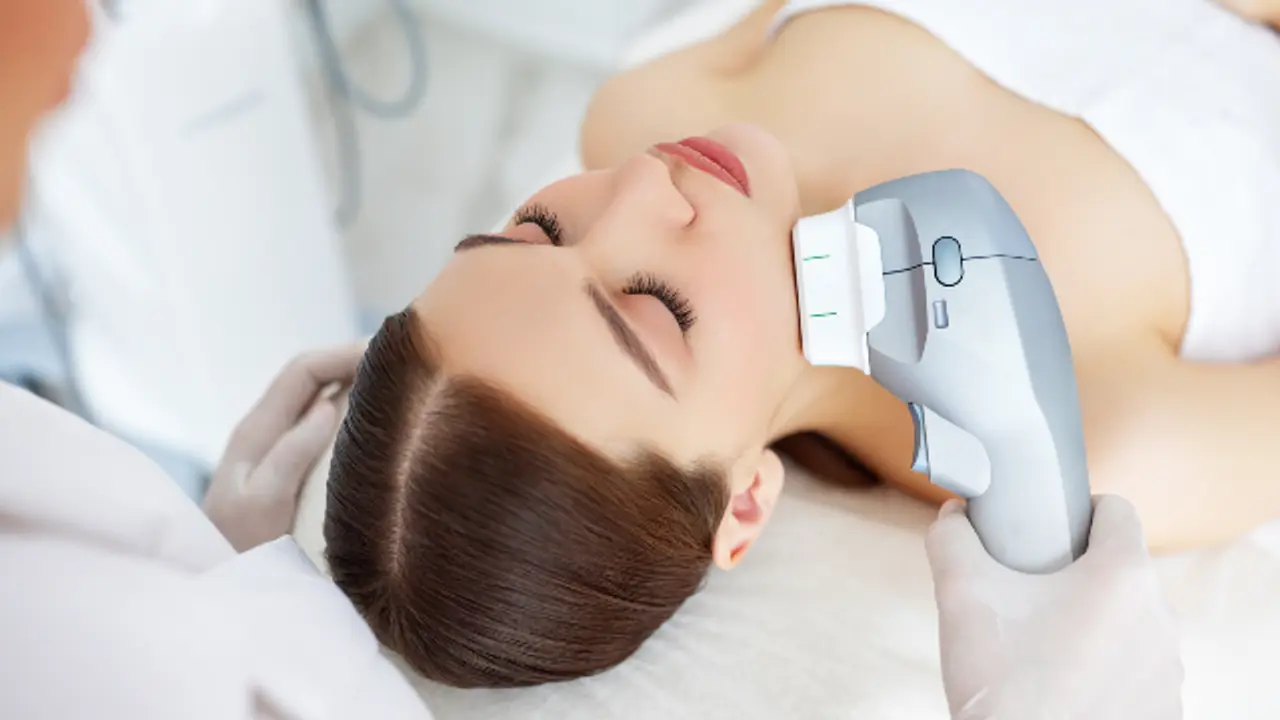
Medical Guide
HIFU Explained: How Focused Ultrasound Lifts Skin Without Surgery
HIFU explained for US patients: how microfocused ultrasound lifts skin without surgery, FDA-cleared Ultherapy, realistic results, and honest risks.
Schedule a ConsultationHIFU Explained: How Focused Ultrasound Lifts Skin Without Surgery
Medically reviewed by Dr. SEO BINNA, Korean Board-Certified Plastic Surgeon
HIFU, short for high-intensity focused ultrasound, is one of the more talked-about non-surgical lifting options both in the United States and in Gangnam, Seoul, where many US patients travel for aesthetic treatment. The appeal is easy to understand: it promises to reach deep layers of tissue without cutting the skin. But the way HIFU actually works is often misunderstood, and the marketing around it can blur the line between different devices and different regulatory approvals.
This article explains what HIFU really is, how focused ultrasound creates a lifting effect at set depths, which devices are cleared by the US Food and Drug Administration (FDA), how HIFU differs from surgery, and what realistic results and risks look like. It is educational and neutral. HIFU is a tool, not a miracle, and whether it suits you is a question for an in-person consultation.
What HIFU Is
Ultrasound is sound energy at frequencies above what humans can hear. Diagnostic ultrasound, the kind used to image a pregnancy, uses this energy to create pictures. HIFU takes the same physical principle but focuses the sound waves to a precise point beneath the skin, much as a magnifying glass focuses sunlight to a single spot. At that focal point, the concentrated energy raises the temperature high enough to create a tiny, controlled zone of heat.
More specifically, HIFU used for aesthetic lifting is a form of microfocused ultrasound. It deposits energy at precise depths to create small, discrete thermal coagulation points, sometimes described as thermal coagulation zones. The surrounding tissue, including the surface of the skin, is left essentially untouched because the energy is only concentrated at the focal depth. This is the central idea: heat is delivered deep and in a controlled pattern, while the outer skin is spared.
How Focused Ultrasound Lifts Skin
Those thermal coagulation points do two things. First, the immediate heating causes tissue to contract, which can produce a subtle early tightening. Second, and more importantly, each point of controlled thermal injury triggers the body's natural wound-healing response. Over the following weeks and months, this response is thought to stimulate new collagen, a process often called neocollagenesis, which gradually firms and lifts the treated area.
A distinctive feature of microfocused ultrasound is its ability to deliver energy at set, selectable depths. Different treatment tips can direct energy to different layers, including deeper foundational tissue that has traditionally been difficult to reach without surgery. By placing coagulation points at chosen depths, a provider can target the layers most relevant to a particular area, such as the brow, the area under the chin, or the neck.
Because the lifting effect depends largely on new collagen forming over time, HIFU results are gradual rather than instant. Most people see the fuller effect develop over roughly two to six months, not on the day of treatment.
FDA-Cleared HIFU: Ultherapy and Ultherapy PRIME
In the United States, the best-known microfocused ultrasound platform is Ultherapy, and its updated system, Ultherapy PRIME, is FDA-cleared. Its clearances include non-invasive lifting of the brow, lifting of the tissue under the chin (submental area) and on the neck, and improvement of lines and wrinkles on the décolleté (upper chest). In 2025, clearances expanded to include certain areas of the arms and abdomen.
A notable feature of this platform is real-time ultrasound imaging, which lets the provider see the layers of tissue before energy is delivered, helping to place the treatment at the intended depth. The manufacturer has described Ultherapy PRIME as the only FDA-cleared microfocused ultrasound device with real-time visualization; that is a manufacturer's characterization, noted here as an attributed claim rather than an independent endorsement. What matters clinically is that the imaging is intended to support accurate, appropriate energy placement.
HIFU Devices Used in Korea: An Important Distinction
Because BSC is in Gangnam, US patients often encounter HIFU devices advertised in Korea that they do not recognize from home. This is where regulatory precision matters.
Not every HIFU device used in Korea is FDA-cleared. Some HIFU systems used in the Korean market, such as Linear-Firm HIFU, are cleared by Korea's Ministry of Food and Drug Safety (MFDS) but are not FDA-cleared in the United States. Linear-Firm HIFU is a distinct device from the FDA-cleared Ultherapy platform, and the two should not be treated as interchangeable. MFDS clearance and FDA clearance are separate regulatory processes with different standards; a device being legally used in Seoul does not mean it has been reviewed or cleared by the FDA.
This is not a statement that MFDS-cleared devices are unsafe, only that their regulatory status differs from what US patients may assume. If a particular HIFU device is recommended to you, it is entirely reasonable to ask which device it is and what its regulatory status is. At BSC, device selection is individualized per patient rather than assigned from a fixed protocol, with treatments delivered at full clinical dosages under the direct oversight of Dr. SEO BINNA.
HIFU Is Not Surgery
It is worth being clear about what HIFU is and is not. A surgical facelift physically removes and repositions tissue and can address significant sagging in a single procedure, with the recovery, risks, and permanence that surgery entails. HIFU does not cut, remove, or reposition anything. It stimulates the body's own tissue to firm gradually from within.
That difference sets expectations. HIFU is generally best suited to people with mild-to-moderate skin laxity who want a subtle, natural improvement without downtime, not to those seeking the degree of change that surgery provides. For more advanced laxity, a qualified surgeon can discuss whether surgical options are more appropriate. HIFU and surgery are not competitors so much as tools for different situations.
Who Might Be a Candidate
HIFU is generally aimed at adults with mild-to-moderate skin laxity who want a subtle lift without surgery or downtime. People who notice early sagging along the brow, jawline, under the chin, or on the neck, but who are not ready for or do not need a surgical procedure, are among those who commonly ask about it. Skin that still has reasonable underlying quality tends to respond more predictably than skin with significant, advanced laxity.
Candidacy also depends on factors beyond the target area, including skin thickness, the amount of soft tissue present, overall health, and realistic expectations. Someone with substantial sagging who wants a dramatic change is unlikely to be satisfied with HIFU alone, whereas someone seeking a modest, natural improvement may be a reasonable candidate. Because facial anatomy and nerve pathways differ from person to person, a hands-on evaluation, not an online assessment, is the only dependable way to judge suitability. A thoughtful provider will also be candid about when HIFU is not the right choice and when a surgical opinion would serve you better.
What a Session Typically Involves
Details vary by device, but most HIFU sessions follow a similar pattern. The skin is cleaned, a coupling gel is applied, and the provider uses the handpiece to deliver energy along a planned map of the treatment area, often adjusting the depth by changing tips. On platforms with real-time imaging, the provider checks the tissue layers before delivering energy. Sessions commonly last from around thirty minutes to over an hour depending on the areas treated.
Downtime is usually minimal, and many people return to normal activities the same day, though some tenderness, swelling, or redness may linger briefly. HIFU is frequently performed as a single session with the effect building over months, and some people choose periodic maintenance later. Your provider should explain aftercare and describe what is normal versus what should prompt a call.
What Results Realistically Look Like
Results from HIFU are gradual, generally modest, and variable from person to person. Some people respond well and notice meaningful firming; others see more subtle change. Factors such as age, skin quality, the degree and location of laxity, and how an individual's tissue responds to controlled heating all influence the outcome. Any improvement is also not permanent, because skin continues to age naturally over time; some people choose periodic maintenance.
No HIFU device can guarantee a specific result, and any suggestion of a guaranteed outcome should be treated with caution. Responsible care includes honest conversation about what is realistically achievable for your skin, which is something only an in-person assessment can establish.
Realistic Risks and Considerations
HIFU is non-invasive and generally well tolerated, but it is not risk-free. Commonly described temporary effects include redness, swelling, tenderness, tingling, and sometimes small areas of bruising in the treated region, which usually resolve within hours to days. Because energy is delivered as heat, discomfort during treatment is common and varies with the area and the settings.
Less common but recognized risks include temporary nerve-related effects. Because facial nerves run through the areas often treated, some patients may experience transient numbness, tingling, or, rarely, temporary muscle weakness such as a short-lived asymmetry of the smile; these effects are typically temporary when they occur. Rare instances of welts, prolonged swelling, or, uncommonly, scarring have also been described. Careful patient selection, appropriate settings, and an experienced provider who understands facial anatomy all reduce risk, which is why technique and assessment matter as much as the device.
This article is educational and is not a self-diagnosis tool. It cannot tell you whether HIFU is right for you or which depth or device would suit your skin. Only an in-person consultation with a qualified medical provider who can examine your skin, review your medical history, and discuss your goals can determine whether HIFU is appropriate for you.
Bottom Line
HIFU uses microfocused ultrasound to create tiny thermal coagulation points at set depths beneath the skin, sparing the surface while triggering a gradual collagen-building response that can subtly lift and firm tissue. In the United States, Ultherapy and Ultherapy PRIME are FDA-cleared for specific lifting indications, and the platform's real-time imaging is intended to support accurate energy placement. Some HIFU devices used in Korea, such as Linear-Firm HIFU, are MFDS-cleared but not FDA-cleared, and they are distinct from Ultherapy, an important distinction if you are treated abroad. HIFU is not surgery; it is best for mild-to-moderate laxity, its results are gradual and vary between people, and it carries real if usually temporary risks. The right decision comes from an in-person consultation, not an advertisement.
Frequently Asked Questions
**How does HIFU lift skin without cutting it?**HIFU focuses ultrasound energy to precise points beneath the skin, creating small thermal coagulation points at set depths while leaving the surface untouched. Those points trigger a wound-healing response that gradually stimulates new collagen, which firms and subtly lifts the area over the following months.
**Is HIFU FDA-cleared?**Ultherapy and Ultherapy PRIME are FDA-cleared for specific uses, including brow, submental, and neck lifting and décolleté lines, with certain arm and abdomen areas added in 2025. However, not every HIFU device is FDA-cleared, so ask which device is being used.
**Are HIFU devices used in Korea the same as Ultherapy?**Not necessarily. Some HIFU devices used in Korea, such as Linear-Firm HIFU, are cleared by Korea's MFDS but are not FDA-cleared and are distinct from Ultherapy. It is reasonable to ask about a device's identity and regulatory status before treatment.
**When will I see HIFU results, and are they permanent?**Because HIFU relies on new collagen forming over time, the fuller effect typically develops over about two to six months. Results are gradual, vary between individuals, and are not permanent, since skin continues to age naturally.
**What are the risks of HIFU?**Common temporary effects include redness, swelling, tenderness, and tingling. Less common risks include transient nerve-related effects such as temporary numbness or, rarely, short-lived muscle weakness. Careful patient selection and an experienced provider help reduce these risks.
This article is for general education only and is not a substitute for professional medical advice. It is not a self-diagnosis tool. Please seek an in-person consultation with a qualified medical provider to discuss your individual situation.
Clinical References & Related Hospital Guides
- Related Clinic Pages: About Our Clinic & Safety Standards · Clinical Centers & Specialties · 1:1 Consultation & Appointment Inquiry
- Authoritative Medical References: American Academy of Dermatology (AAD) · NCBI PubMed Clinical Literature
More Articles
Continue reading our clinical guides.

Dr. SEO BINNA Guide To Seoul Plastic Surgery Excellence
Learn why Dr SEO BINNA is the premier choice for lifting and surgery in Seoul. Discover Beautiful Story Clinic for expert care and natural results.
Learn More
Stem Cell Skin Treatment Korea 2026 Clinical Guide
Discover the definitive 2026 guide to stem cell skin treatment in Korea at Beautiful Story Clinic. Learn about IV therapy and fat grafting safety.
Learn More
Oligio RF Korea Results Cost and Professional Guide 2026
Discover the benefits of Oligio RF Korea for non surgical skin tightening. Learn about results and costs in Seoul versus the USA from Dr. SEO BINNA today.
Learn More