Beauty Story Clinic Gangnam — Personalized 1:1 Aesthetic Care & Anti-Aging Specialists


Medical Guide
Juvelook Korea: The Hybrid Collagen-Stimulating Skin Booster Explained
A clear guide to Juvelook in Korea: how the PDLLA + HA hybrid booster works, how it differs from FDA-approved Sculptra, US-FDA status, and what to expect.
Schedule a ConsultationJuvelook Korea: The Hybrid Collagen-Stimulating Skin Booster Explained
Medically reviewed by Dr. SEO BINNA, Korean Board-Certified Plastic Surgeon
Juvelook is one of the newer names in the Korean skin-booster conversation, and it tends to confuse people because it sits between two familiar categories. It is not a plain hyaluronic acid filler, and it is not exactly a classic collagen biostimulator either. It is a hybrid, and understanding what that means is the key to understanding Juvelook results and whether the treatment is even relevant to your goals. This guide explains the hybrid PDLLA and HA mechanism in plain language, draws a careful and important distinction between Juvelook and the FDA-approved product it is most often compared to, and lays out the regulatory picture honestly for a reader in the United States.
A few principles run through everything below. Juvelook is a skin-quality treatment that combines immediate hydration with gradual collagen stimulation; it is not a large-volume filler and not a facelift. Its results build gradually and vary from person to person. And, critically for a US reader, Juvelook is not approved by the US Food and Drug Administration; it is offered at Beautiful Story Clinic in Seoul under Korean and European regulation. This article is educational and is not a self-diagnosis tool. Suitability is confirmed only through an in-person consultation and Dr. SEO BINNA's individual facial analysis.
What Juvelook Is: A Hybrid PDLLA + HA Skin Booster
Juvelook is described as an advanced hybrid skin booster that combines poly-D,L-lactic acid (PDLLA) with non-crosslinked hyaluronic acid (HA) in a single injectable. That combination is the whole point. It is why the treatment is discussed as a "hybrid" rather than as a filler or a biostimulator alone. Patients sometimes call it a collagen booster, a PDLLA skin booster, a hybrid skin booster, a collagen-stimulating injection, or a glow booster; these all refer to the same category of treatment.
It is a Korean-developed product supplied as a powder that is reconstituted before treatment, and it is typically used on the face and neck. The clinic frames it as delivering a longer-lasting "skin-quality" improvement than hydration-only boosters, because it does two things at once rather than one. Importantly, this is not a heavy structural filler; it is a skin-quality treatment, and its benefits build gradually and are maintained periodically rather than achieved in a single dramatic step.
How the Hybrid Mechanism Works
The dual action is what makes Juvelook distinctive, so it is worth walking through carefully. The hyaluronic acid component provides immediate hydration and a fresh, plumped look right away. HA attracts and holds water, so the visible freshness appears early. That is the "immediate" half of the hybrid.
The PDLLA component works on a slower timeline. The poly-D,L-lactic acid microparticles gently stimulate your own fibroblasts, the cells responsible for producing collagen, to build new collagen over the following weeks and months. This is the biostimulatory half. Rather than filling a space, the PDLLA prompts the skin to generate its own supportive collagen gradually. The combined result the clinic describes is improved skin texture, elasticity, fine lines, and overall radiance, developing over time.
This two-stage logic explains why Juvelook is sometimes described in the context of "skin thickening" and firmness rather than pure volume. The immediate HA effect is hydration and freshness; the durable effect is the gradual, collagen-driven improvement in skin quality. Because the meaningful change comes from your own collagen response, Juvelook results are gradual and continue to develop over several months. The clinic notes that skin hydration may improve shortly after treatment, while collagen stimulation develops gradually, with improvements continuing over weeks to months, commonly across a short course of sessions spaced several weeks apart.
Juvelook vs. Sculptra: A Critical Distinction
The juvelook vs sculptra comparison is the single most important thing to get right in this article, because the two products sound similar and are constantly conflated, yet they differ in a way that matters enormously for a US reader.
Sculptra is made of poly-L-lactic acid (PLLA), and Sculptra is US-FDA-approved. Juvelook is made of poly-D,L-lactic acid (PDLLA), and Juvelook is not US-FDA-approved. That single-letter difference in the polymer name reflects a genuinely different material with a different regulatory status. PLLA (Sculptra) has US FDA approval; PDLLA (Juvelook) does not. They are not the same molecule, and the FDA approval that applies to one does not transfer to the other.
This distinction is worth stating bluntly because a lot of online content blurs it, implying that because a poly-lactic-acid collagen stimulator is FDA-approved, "Juvelook must be too." That reasoning is wrong. Do not assume Juvelook shares Sculptra's FDA approval. Sculptra (PLLA) is FDA-approved; Juvelook (PDLLA) is not. If you are weighing collagen-stimulating options, this is precisely the kind of detail to raise directly with a physician, and precisely the kind of claim to be skeptical of when a marketing page glosses over it.
Beyond regulation, the products also differ in design. Sculptra is a pure poly-L-lactic acid collagen biostimulator delivered as a series of sessions with gradual results. Juvelook is a hybrid, pairing HA for immediate hydration with PDLLA for gradual collagen stimulation. The point of comparison is not to rank them but to be clear that they are different materials with different regulatory standings, and that the choice between any options belongs in a consultation.
The Regulatory Picture for USA Patients
Stated plainly: Juvelook is not US-FDA-approved. The clinic documents it as MFDS-approved (Korea's Ministry of Food and Drug Safety) and CE-marked (a European conformity marking). Neither of those is equivalent to US FDA approval. For a US patient, that means Juvelook is a treatment offered abroad, under different countries' regulatory frameworks, and the FDA does not oversee treatments performed outside the United States.
This is not a statement that the treatment is unsafe where it is offered; it is a statement about regulatory status and jurisdiction, which is information you deserve before making a decision or planning travel. It is also a reason to ask precise questions, to expect realistic answers, and to disregard any site that implies US regulatory endorsement of Juvelook. When you combine this with the Sculptra distinction above, the honest summary is simple: if a specific poly-lactic-acid product's FDA status matters to you, verify it by name, because PDLLA (Juvelook) and PLLA (Sculptra) do not share the same status.
Why Environmental Skin Damage May Respond to This Mechanism
US patients from sun-intensive regions, for example those searching as juvelook Houston Chicago patients, sometimes ask why a hybrid booster is discussed for their concerns rather than a plain HA filler. The reasoning is mechanistic. Cumulative environmental exposure tends to degrade skin quality broadly, texture, fine lines, elasticity, and overall radiance, rather than creating a single hollow that needs filling. A plain hyaluronic acid filler primarily restores volume in a defined area. A hybrid like Juvelook is designed to address skin quality across an area: HA for immediate hydration and PDLLA to stimulate the skin's own collagen over time.
That is why, for someone whose main concern is generalized skin-quality decline rather than a discrete volume deficit, a physician may discuss a collagen-stimulating hybrid rather than a straightforward filler. It is not a promise of a particular outcome; it is an explanation of why the mechanism can match the concern. Whether it is right for you specifically depends on your skin and is determined during assessment.
What to Expect: Sessions, Procedure, and Results
At Beautiful Story Clinic, every plan is built through individual facial analysis by Dr. SEO BINNA. For Juvelook, the consultation covers a skin assessment, a discussion of your goals for texture, elasticity, and glow, a medical history and allergy review, an explanation of the gradual collagen effect, and a course plan, typically 2 to 3 sessions spaced roughly 4 to 6 weeks apart. This is guidance, not a fixed package; the specifics are set for you.
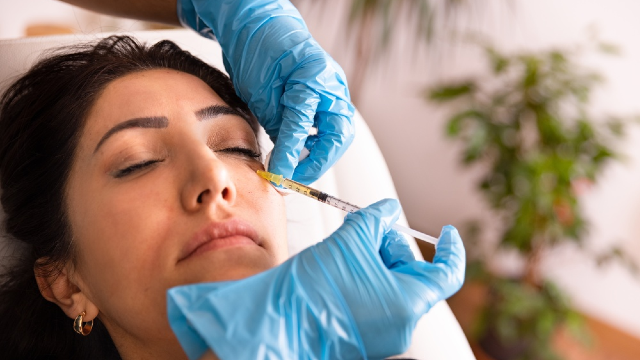
The procedure is straightforward and minimally invasive. The skin is cleansed, and a topical numbing cream is applied for comfort. The reconstituted Juvelook is then injected through fine micro-injections, or a cannula, into the skin across the treatment area. The area is soothed, calming skincare and SPF are applied, and the next session is planned. Procedure time is approximately 30 minutes, downtime is minimal, and most patients resume daily activities immediately. Sensation during treatment is usually mild, small pin-pricks during the micro-injections.
Realistic outcomes matter here. The clinic describes hydrated skin quickly, then gradually firmer, smoother, more elastic, and more radiant skin as collagen builds over roughly three to six months. The honest limitation, stated by the clinic, is that Juvelook is a skin-quality treatment, not a large-volume filler; results build gradually and are maintained periodically. It does not stop aging, and no permanent or guaranteed result should be expected.
Common Side Effects and Recovery
As with any injectable, temporary effects are common. The clinic notes these can include mild redness, slight swelling, and minor bruising. Most patients return to normal daily activities immediately after treatment. In the first 24 to 48 hours, patients are advised to avoid excessive heat, saunas, and hot baths, to avoid strenuous exercise, and to follow the clinic's skincare instructions.
Because Juvelook is minimally invasive, downtime is limited, but individual responses vary. As with all injectables, less common or serious risks are possible and are managed by the treating physician; contraindications include pregnancy or breastfeeding, known hypersensitivity to any component, active skin infection, inflammation or breakout in the area, and a keloid tendency or autoimmune concerns, which are assessed case by case. This is why a clinic assessment is required before treatment rather than optional.
A Note on Cost
"How much does Juvelook cost" is a natural question, but a fixed figure is not published here. Cost depends on qualitative factors, the number of sessions your individualized plan calls for, the areas treated, and the specifics determined at consultation. Pricing is confirmed directly with the clinic as part of your personal plan, and any flat price quoted online should be treated with caution.
Dr. Seo's Juvelook Meister Designation
Beautiful Story Clinic notes that Dr. SEO BINNA holds a Juvelook Meister designation. It is important to describe this accurately. It is a manufacturer/training designation, a product-specific title, not a medical board certification and not any form of regulatory or FDA endorsement of Juvelook. It should never be read as implying that Juvelook is FDA-approved, because it is not.
That designation sits alongside her core credential. Dr. Seo is a Korean Board-Certified Plastic Surgeon and an active member of the Korean Society of Plastic and Reconstructive Surgeons and the Korean Society for Aesthetic Plastic Surgery, with more than a decade of clinical experience in facial rejuvenation and aesthetic medicine, and she is a former Clinical Professor at Chosun University Hospital. For a patient, the useful takeaway is that treatment planning and injection are carried out by a board-certified plastic surgeon who evaluates your skin within the context of your underlying facial structure, and that the "Juvelook Meister" title reflects product-specific training rather than a certification or a regulatory endorsement.
The Bottom Line
- Juvelook is a hybrid PDLLA + HA skin booster. The HA provides immediate hydration; the PDLLA stimulates your own collagen gradually over weeks to months. It is a skin-quality treatment, not a large-volume filler.
- Juvelook is not the same as Sculptra. Sculptra is poly-L-lactic acid (PLLA) and is US-FDA-approved; Juvelook is poly-D,L-lactic acid (PDLLA) and is not. Do not assume the two share the same regulatory status.
- Juvelook is not US-FDA-approved. It is documented as MFDS-approved and CE-marked, and is offered in Seoul under those frameworks; the FDA does not oversee treatments performed abroad.
- Results are gradual and vary. Hydration appears early; collagen-driven improvement develops over roughly three to six months. Common temporary effects are mild redness, slight swelling, and minor bruising.
- Candidacy and cost are individualized and confirmed only through in-person consultation and Dr. SEO BINNA's facial analysis. Her Juvelook Meister status is a manufacturer designation, not a certification or an FDA endorsement.
Frequently Asked Questions
**What is Juvelook made of?**Juvelook is a hybrid injectable combining poly-D,L-lactic acid (PDLLA) with non-crosslinked hyaluronic acid (HA). The HA delivers immediate hydration and a fresh look, while the PDLLA microparticles stimulate your own fibroblasts to build collagen gradually over the following weeks and months.
**Is Juvelook the same as Sculptra?**No. Sculptra is poly-L-lactic acid (PLLA) and is US-FDA-approved. Juvelook is poly-D,L-lactic acid (PDLLA) and is not US-FDA-approved. They are different materials with different regulatory statuses, so the approval that applies to Sculptra does not apply to Juvelook.
**Is Juvelook FDA-approved in the United States?**No. Juvelook is not US-FDA-approved. It is documented as MFDS-approved (Korea) and CE-marked (Europe), and it is offered at Beautiful Story Clinic in Seoul under those frameworks. The FDA does not oversee treatments performed outside the United States.
**How long until I see Juvelook results?**Hydration may improve shortly after treatment thanks to the HA component. The collagen-stimulating effect of the PDLLA develops gradually, with improvements typically continuing over roughly three to six months. Best results usually come from a short course of sessions, and outcomes vary between individuals.
**Is Juvelook good for skin thickening or just volume?**Juvelook is framed as a skin-quality treatment aimed at texture, elasticity, fine lines, and radiance through gradual collagen stimulation, rather than as a large-volume filler. Whether it suits your specific concern is determined during a consultation and facial analysis.
**What side effects should I expect?**Common temporary effects include mild redness, slight swelling, and minor bruising. Most people resume normal activities immediately, while avoiding heat, saunas, and strenuous exercise for 24 to 48 hours. Less common or serious risks are possible and are managed by the treating physician; a pre-treatment assessment screens for contraindications.
This article is for general informational purposes and is not a self-diagnosis tool or individualized medical advice. Regulatory status differs by country: Juvelook is not US-FDA-approved and is offered in Seoul under Korean (MFDS) and European (CE) frameworks. Consult a qualified physician about your specific situation.
Clinical References & Related Hospital Guides
- Related Clinic Pages: About Our Clinic & Safety Standards · Clinical Centers & Specialties · 1:1 Consultation & Appointment Inquiry
- Authoritative Medical References: American Academy of Dermatology (AAD) · NCBI PubMed Clinical Literature
More Articles
Continue reading our clinical guides.

Dr. SEO BINNA Guide To Seoul Plastic Surgery Excellence
Learn why Dr SEO BINNA is the premier choice for lifting and surgery in Seoul. Discover Beautiful Story Clinic for expert care and natural results.
Learn More
Stem Cell Skin Treatment Korea 2026 Clinical Guide
Discover the definitive 2026 guide to stem cell skin treatment in Korea at Beautiful Story Clinic. Learn about IV therapy and fat grafting safety.
Learn More

Oligio RF Korea Results Cost and Professional Guide 2026
Discover the benefits of Oligio RF Korea for non surgical skin tightening. Learn about results and costs in Seoul versus the USA from Dr. SEO BINNA today.
Learn More