Beauty Story Clinic Gangnam — Personalized 1:1 Aesthetic Care & Anti-Aging Specialists

Medical Guide
Mid-Face Cheek-Up Thread Lifting Korea: Nasolabial Fold Guide
How mid-face cheek-up thread lifting in Seoul addresses nasolabial folds: how it works, candidacy, recovery, and what to confirm at consultation.
Schedule a ConsultationMid-Face Cheek-Up Thread Lifting Korea: Nasolabial Fold Guide
Medically reviewed by Dr. SEO BINNA, Korean Board-Certified Plastic Surgeon
As the mid-face ages, the cheek fat pads that once sat high and full tend to descend. When that soft tissue slides downward, it can deepen the nasolabial folds — the lines that run from the sides of the nose to the corners of the mouth — and leave the cheeks looking flatter and less defined. Mid-face cheek-up thread lifting is a minimally invasive approach to this specific pattern of change. Rather than filling the fold from below, it aims to reposition the descended cheek tissue upward, which can soften the fold at its source while restoring a more balanced, three-dimensional contour.
This guide explains how mid-face thread lifting works, who tends to be a reasonable candidate, what recovery generally involves, and how the regulatory picture differs between the United States and Korea. It is written for readers in the US who are researching treatment at Beautiful Story Clinic, a specialist-led aesthetic clinic in the Gangnam district of Seoul. It is educational only and is not a self-diagnosis tool; whether this treatment suits your face can only be determined through an in-person assessment.
What Mid-Face Cheek-Up Thread Lifting Is
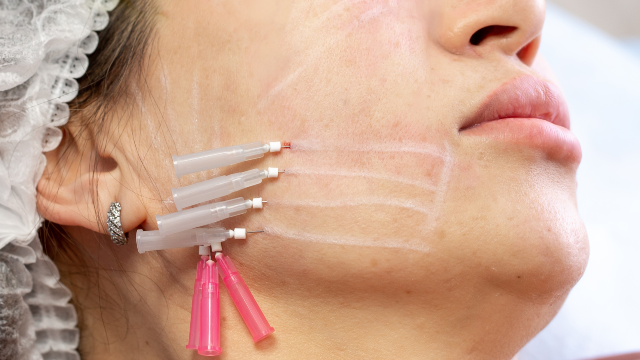
Mid-face cheek-up thread lifting is a form of thread lifting focused on the central face and cheeks. Thread lifting as a category is a minimally invasive facial rejuvenation procedure that uses fine, dissolvable threads inserted beneath the skin to lift and reposition sagging tissue while also stimulating the body's own collagen production. Unlike a traditional surgical facelift, it does not involve large incisions or general anesthesia, and it is designed to improve facial contours with minimal disruption to the surrounding tissue.
Applied to the mid-face, the goal is to lift the descended cheek soft tissue back toward its more youthful position. When that happens, the nasolabial fold is addressed indirectly: the weight pulling the fold down is reduced, and cheek volume and projection are re-established. Beautiful Story Clinic describes this as restoring facial balance and improving cheek volume while reducing the appearance of nasolabial folds, with the aim of a naturally refreshed look rather than a pulled or overcorrected one.
It is important to be clear about what this is and is not. Mid-face thread lifting is not a facelift and is not equivalent to one. It is not permanent, and results are not guaranteed. It is best understood as a non-surgical option for people with early to moderate tissue descent who want contour improvement without surgery, and whose expectations are realistic.
How the Two Mechanisms Work
Thread lifting works through two distinct mechanisms, and understanding both helps set realistic expectations for the mid-face.
The first is an immediate mechanical lift. When the threads are placed and the descended cheek tissue is repositioned upward, there is a lifting effect you can see soon after the procedure. This is the structural, "here and now" part of the result — the threads physically hold tissue in a higher position.
The second is gradual collagen stimulation. The threads used are absorbable, meaning the body slowly dissolves them over time. As they dissolve, they stimulate the formation of new collagen along the treated pathways. This collagen response develops over the following weeks and supports skin firmness and structural improvement even as the original threads break down. In other words, the early result comes from the thread itself; the longer-term contribution comes from the collagen the treatment encourages your skin to build.
Because the collagen component is gradual, the full picture of a thread lift is not visible on day one. The mechanical lift is immediate, but skin quality and firmness continue to evolve as remodeling occurs. Individual results vary depending on facial anatomy, skin condition, and how your tissue responds.
Why the Mid-Face and Nasolabial Folds Specifically
The mid-face is a logical target for thread-based lifting because so much of what people read as "aging" in this zone is really tissue that has moved rather than tissue that has simply thinned. Sagging cheeks, loss of cheek volume, deepening nasolabial folds, and fine wrinkles caused by skin laxity often travel together, and they frequently share a common cause in descended mid-face soft tissue.
Threads are designed to reposition that tissue along planned vectors. By lifting the cheek upward and slightly outward, the treatment can re-drape the skin over the fold and rebuild the higher, rounder contour associated with a youthful mid-face. This is a different strategy from placing filler directly into a nasolabial fold, which adds volume to the crease itself. Some patients are better suited to one approach, some to the other, and some to a combination — which is exactly the kind of judgment that belongs in a consultation rather than an article.
Candidates who tend to be considered for mid-face cheek-up thread lifting include those experiencing sagging cheeks, loss of cheek volume, deepening nasolabial folds, fine wrinkles related to skin laxity, and people who were dissatisfied with a previous thread lifting procedure, as well as those seeking improved facial contour and balance through a non-surgical route.
How Dr. Seo Personalizes the Procedure
At Beautiful Story Clinic, every thread lifting procedure is personally planned by Dr. SEO BINNA, a Korean Board-Certified Plastic Surgeon, following an individualized facial assessment. There are no pre-packaged protocols. Instead, the thread type, placement direction, depth, and lifting vectors are customized according to each patient's facial anatomy and aesthetic goals.
For the mid-face specifically, the consultation includes an assessment of facial structure, skin condition, facial proportions, and the degree of cheek sagging, along with a discussion of what the patient hopes to achieve. From that, Dr. Seo develops a treatment plan intended to correct contour in three dimensions and support facial harmony, rather than simply pulling tissue straight up. The clinic emphasizes multi-angle thread insertion so that the correction respects the natural shape of the face and preserves normal facial expression.
This individualized, physician-led approach is reinforced by the clinic's one-patient-per-hour model, which is designed to give each session focused, uninterrupted clinical time. The plan, the placement, and the oversight all sit with the physician rather than being delegated to a technician.
Threads, the FDA, and Korean (MFDS) Regulation
The regulatory status of thread products is one of the most important things for a US reader to understand, because it differs by country and by product.
In the United States, some absorbable thread products carry US Food and Drug Administration (FDA) clearances. MINT PDO threads hold FDA 510(k) clearances, including for reduction of nasolabial fold depth and for facial tissue suspension. Separately, Silhouette InstaLift, which uses poly-L-lactic acid (PLLA) absorbable threads, is FDA-cleared for cosmetic facial procedures. These are product-level facts about specific devices. A useful naming point: the US-cleared PLLA product is "Silhouette InstaLift," which is distinct from the internationally marketed "Silhouette Soft" — so a US reader should not assume the two names refer to the same regulatory status.
Here is the key distinction. FDA clearance applies to specific products in the US market. The specific thread products used at Beautiful Story Clinic in Seoul are provided under Korean regulation through the Ministry of Food and Drug Safety (MFDS), which is a separate regulatory framework from the US FDA. If knowing the exact product and its regulatory basis matters to you, confirm the specific threads to be used directly with the clinic during your consultation. The takeaway is not that one system is superior, but that they are different, and that clearance of one branded product in the US does not automatically describe the product used in a Seoul clinic.
What Recovery Generally Involves
Mid-face thread lifting is minimally invasive and is typically performed under local anesthesia. Most patients are able to return to daily activities shortly after the procedure. The clinic notes that mild swelling, bruising, discomfort, or a temporary heat sensation may occur and generally settle within roughly two to three days, though individual experiences differ.
Aftercare guidance from the clinic includes allowing light cleansing and makeup on the same day, avoiding exfoliating products for approximately two weeks, keeping the skin hydrated and moisturized, applying sunscreen when outdoors, and avoiding saunas, hot baths, and strenuous exercise for about one week. Because thread lifting also relies on gradual collagen stimulation, skin quality continues to develop over the following weeks after the immediate lift.
As with any thread procedure, there are risks and possible side effects to be aware of. Common temporary effects include bruising, swelling, and tenderness. Dimpling or puckering of the skin over the treated area can occur. Less commonly, threads may become partially exposed (thread extrusion), or asymmetry may develop. These possibilities, along with your own health history and any contraindications, should be discussed with the physician before treatment so you understand what to watch for and when to contact the clinic.
What Results Look Like — and What They Do Not
For the mid-face, the immediate mechanical lift is generally the most visible early change: repositioned cheek tissue and a softened nasolabial fold. Over the following weeks, collagen remodeling contributes gradually to skin firmness and support. The clinic describes long-lasting support from the treatment, but it does not state a fixed duration, and it is honest that individual longevity varies with facial structure, skin condition, lifestyle, and the natural aging process.
What this treatment does not do is stop aging or deliver a permanent, surgical-grade result. It is not a facelift equivalent, and no specific percentage of improvement or guaranteed outcome should be expected. Thinking of it as a customizable, non-surgical way to reposition mid-face tissue and support collagen — rather than a one-and-done cure — is the most accurate frame.
Bottom Line
Mid-face cheek-up thread lifting targets one of the most common drivers of a tired or heavier-looking mid-face: descended cheek tissue that deepens the nasolabial folds. By repositioning that tissue upward with absorbable threads, it offers an immediate mechanical lift plus gradual collagen stimulation as the threads dissolve. At Beautiful Story Clinic, the procedure is personally planned by Dr. SEO BINNA, with thread type, depth, and vectors customized to your anatomy. It is minimally invasive, not permanent, and not a facelift equivalent, and results vary. In the US, certain thread products (MINT PDO, Silhouette InstaLift PLLA) are FDA-cleared, while the specific threads used in Seoul fall under Korean MFDS regulation — a distinction worth confirming with the clinic. The only reliable way to know whether this treatment fits your face is an in-person consultation.
Frequently Asked Questions
**Does mid-face thread lifting remove nasolabial folds completely?**No. It aims to reduce the appearance of nasolabial folds by lifting and repositioning the descended cheek tissue that contributes to them, rather than erasing the fold entirely. Results vary between individuals, and complete removal is not a claim the clinic makes.
**Is this the same as a facelift?**No. Thread lifting is minimally invasive and is not a facelift equivalent. A surgical facelift is a different, more invasive procedure. Thread lifting is generally considered for people with early to moderate tissue descent who prefer a non-surgical option and have realistic expectations.
**How long does it last?**The immediate lift comes from the threads, while collagen stimulation develops over the following weeks. The clinic describes long-lasting support but does not specify an exact duration, because longevity depends on your skin, anatomy, lifestyle, and natural aging. It is not permanent.
**What side effects should I expect?**Common temporary effects include bruising, swelling, and tenderness, which often settle within a few days. Dimpling or puckering can occur, and less commonly thread extrusion or asymmetry. Discuss the full risk profile and any contraindications with the physician at your consultation.
**Are the threads FDA-approved?**In the US, some thread products hold FDA clearances — MINT PDO threads (including for nasolabial fold depth reduction) and Silhouette InstaLift PLLA threads. The specific threads used at Beautiful Story Clinic in Seoul are provided under Korean MFDS regulation. Confirm the exact product with the clinic if this is important to you.
**Can I combine it with other treatments?**Thread lifting may be performed alone or as part of a broader plan. Whether combining treatments is appropriate for you is a decision Dr. Seo makes during the individualized consultation based on your facial analysis and goals.
Disclaimer
This article is for general educational purposes only and is not medical advice or a self-diagnosis tool. It does not establish a doctor-patient relationship. Regulatory status of thread products differs by country: clearances described here apply to specific products in the United States, while treatments in Seoul are regulated under Korea's MFDS framework. Candidacy, risks, and expected outcomes can only be determined through an in-person consultation and facial assessment with a qualified physician. Please consult Beautiful Story Clinic directly to discuss your individual situation, the specific products used, and any pricing questions.
Clinical References & Related Hospital Guides
- Related Clinic Pages: About Our Clinic & Safety Standards · Clinical Centers & Specialties · 1:1 Consultation & Appointment Inquiry
- Authoritative Medical References: American Society of Plastic Surgeons (ASPS) · Korean Society of Plastic and Reconstructive Surgeons (KSPRS)
More Articles
Continue reading our clinical guides.
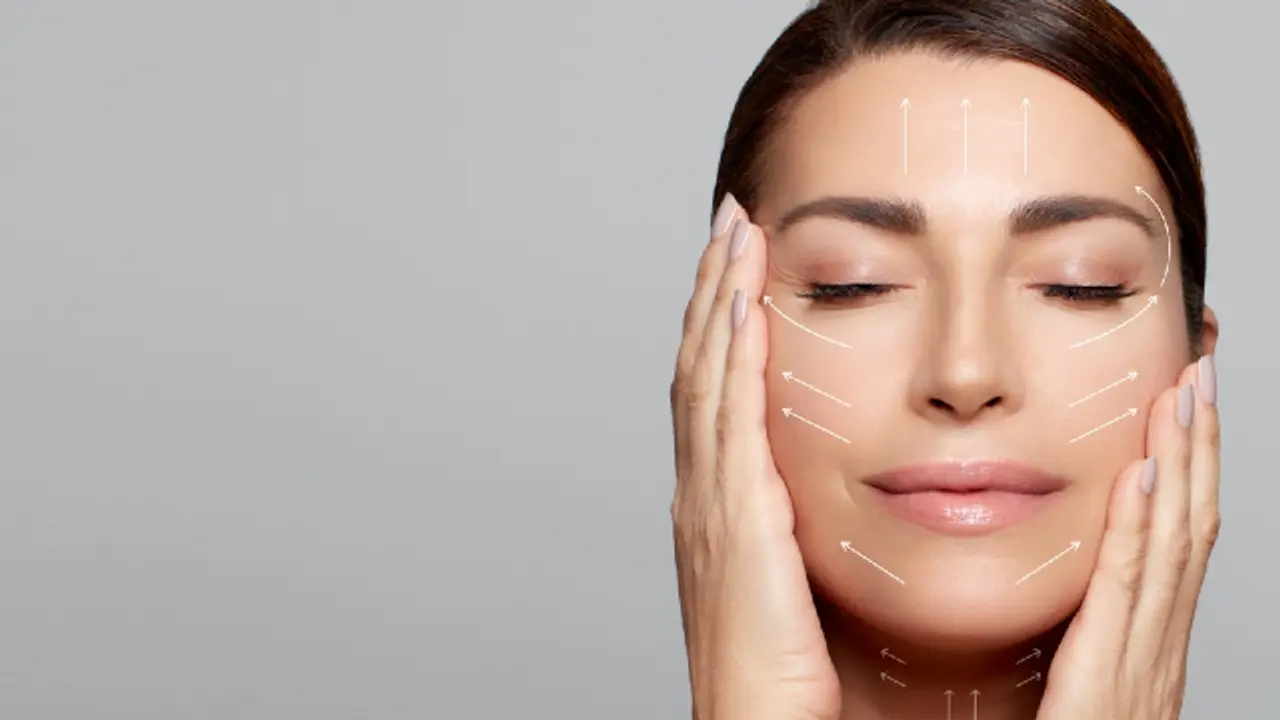
Dr. SEO BINNA Guide To Seoul Plastic Surgery Excellence
Learn why Dr SEO BINNA is the premier choice for lifting and surgery in Seoul. Discover Beautiful Story Clinic for expert care and natural results.
Learn More
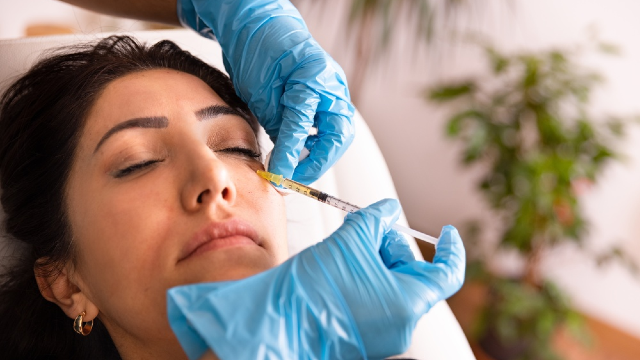
Stem Cell Skin Treatment Korea 2026 Clinical Guide
Discover the definitive 2026 guide to stem cell skin treatment in Korea at Beautiful Story Clinic. Learn about IV therapy and fat grafting safety.
Learn More
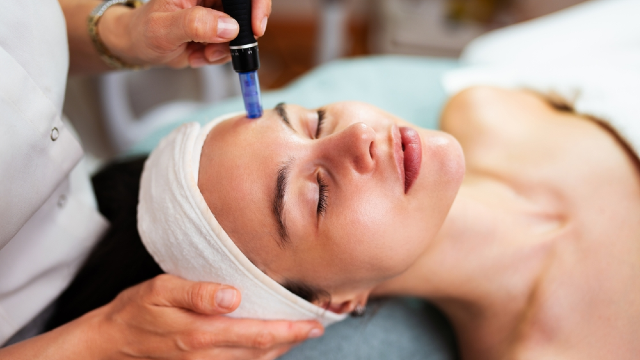
Oligio RF Korea Results Cost and Professional Guide 2026
Discover the benefits of Oligio RF Korea for non surgical skin tightening. Learn about results and costs in Seoul versus the USA from Dr. SEO BINNA today.
Learn More