Beauty Story Clinic Gangnam — Personalized 1:1 Aesthetic Care & Anti-Aging Specialists

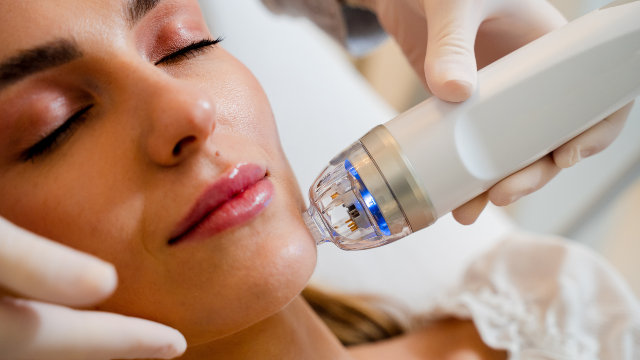
Medical Guide
Monopolar vs Bipolar Radiofrequency: What US Patients Should Know
Monopolar vs bipolar radiofrequency explained for US patients: how energy path and penetration depth differ, FDA-cleared examples, and realistic results.
Schedule a ConsultationMonopolar vs Bipolar Radiofrequency: What US Patients Should Know
Medically reviewed by Dr. SEO BINNA, Korean Board-Certified Plastic Surgeon
Radiofrequency (RF) has become one of the most common energy-based approaches to non-surgical skin tightening, both in the United States and in Gangnam, Seoul, where many US patients travel for aesthetic care. If you have researched RF at all, you have probably run into two words that get used a lot: monopolar and bipolar. These terms describe how the device delivers energy into the skin, and understanding the difference can help you ask better questions during a consultation.
This article is a neutral, physics-focused explainer. It does not crown a winner. Monopolar and bipolar (and multipolar) RF are different tools that behave differently, and the right choice depends on your anatomy, your goals, and a provider's in-person assessment. Below, we walk through how each type works, how energy path and penetration depth differ, which representative devices are cleared by the US Food and Drug Administration (FDA), and what realistic expectations look like.
What Radiofrequency Actually Does
Radiofrequency is a form of electromagnetic energy. When RF passes through skin tissue, the tissue's natural resistance to that current generates heat. Controlled heating in the dermis is thought to cause immediate collagen contraction and to trigger a wound-healing response that gradually stimulates new collagen over the following weeks and months. Unlike lasers, RF does not target pigment or a specific chromophore, so it is generally considered to work across a range of skin tones, though provider assessment always matters.
The key variable in any RF treatment is where the heat is concentrated and how deep it reaches. That is precisely what the electrode configuration, monopolar versus bipolar, controls. Everything else being equal, the arrangement of the electrodes shapes the path the current takes and therefore the depth and pattern of heating.
Monopolar Radiofrequency: One Electrode, Deeper Path
In a monopolar system, current flows from a single active electrode on the treatment handpiece, travels through the body's tissue, and returns to a separate grounding pad placed elsewhere on the body. Because the current must travel from the handpiece to that distant return pad, the energy tends to penetrate more deeply into the tissue before dissipating. This deeper energy path is why monopolar RF is often associated with treating deeper dermal and subdermal laxity.
A widely recognized example is Thermage FLX, a monopolar capacitive RF device that is FDA-cleared for the non-invasive treatment of periorbital and facial wrinkles, including the eyelids, and for wrinkles on the body. Monopolar devices frequently use surface cooling at the tip so that the outer layer of skin is protected while heat is delivered to deeper structures. Treatments are often designed as a single session with results that build gradually.
The trade-off with deeper penetration is that the sensation can be more intense, and precise, uniform delivery depends heavily on operator technique. Deeper heating also means the provider must be attentive to comfort and to protecting the skin surface throughout the session.
Bipolar and Multipolar Radiofrequency: Contained, Shallower Path
In a bipolar system, both the active and return electrodes sit on the same handpiece, close together. The current flows only between those two electrodes rather than traveling all the way through the body to a grounding pad. This keeps the energy contained in a more localized, typically shallower zone directly beneath and between the electrodes.
Multipolar RF is an extension of this idea, using three or more electrodes that alternate roles, which can distribute heating across a treatment area. Because the energy path is short and confined, bipolar and multipolar systems offer more predictable control over the depth of heating, though that depth is generally shallower than what monopolar delivery reaches on its own.
InMode platforms, such as Forma and Morpheus8, are examples of bipolar or multipolar RF technology and are FDA-cleared. Some InMode configurations combine RF with microneedles to deliver energy at set depths beneath the surface, which is a different mechanism from purely surface-applied RF. Bipolar and multipolar treatments are often delivered as a series of sessions spaced weeks apart rather than as a single visit.
Energy Path and Penetration Depth, Side by Side
The clearest way to think about the two categories is to picture the route the current takes.
- Monopolar: current travels from a single handpiece electrode through the body to a distant grounding pad. Deeper penetration, broader energy field, often single-session designs, surface cooling common.
- Bipolar/multipolar: current travels a short distance between electrodes on the same handpiece. Shallower, more contained, more controllable depth, frequently delivered in multiple sessions.
Neither pattern is inherently superior. Deeper is not automatically better, and more contained is not automatically safer. The appropriate choice depends on the tissue being treated, the degree and location of laxity, skin thickness, and individual factors that only an in-person evaluation can establish. Some treatment plans even combine modalities over time.
A Note on Devices Used in Korea
Because BSC is located in Gangnam, US patients frequently ask about RF devices they have seen advertised in Korea that they do not recognize from home. This is an important distinction to understand before you travel.
Some RF devices marketed in the Korean aesthetic market, such as Density and Corage-XERF, are cleared by Korea's Ministry of Food and Drug Safety (MFDS) but are not FDA-cleared in the United States. MFDS clearance and FDA clearance are separate regulatory pathways with different requirements. A device being available and legally used in Seoul does not mean it has been reviewed or cleared by the FDA, and vice versa. If a specific device is recommended to you, it is entirely reasonable to ask about its regulatory status and why it is being suggested for your situation.
At BSC, device selection is customized per patient rather than assigned from a pre-packaged protocol, and treatments are used at full clinical dosages under the direct oversight of Dr. SEO BINNA. The goal of a consultation is to match the tool to the person, not the person to a single machine.
Who Might Be a Candidate
RF skin tightening is generally aimed at people with mild-to-moderate skin laxity who want a subtle, non-surgical improvement and who understand that changes develop slowly. Common areas of interest include the lower face and jawline, the area under the chin, the neck, and certain body regions, depending on the specific device and its clearances. Skin that has good underlying quality but has begun to lose firmness often responds more predictably than skin with advanced sagging.
Candidacy is not just about the area you want treated. Skin thickness, the amount of fat and soft tissue present, your overall health, and your expectations all factor in. Someone hoping RF will replace a facelift is likely to be disappointed, while someone seeking a modest refresh with no downtime may be a reasonable candidate. This is why a face-to-face evaluation, rather than an online quiz or a social media before-and-after, is the only reliable way to know whether RF fits your situation. A responsible provider will also tell you when RF is not the right tool and when a surgical consultation would serve you better.
What a Session Typically Involves
While details vary by device, most RF treatments follow a broadly similar arc. The area is cleaned, a coupling gel or grid may be applied, and the provider passes the handpiece over the skin in a planned pattern, adjusting settings to your comfort and the treatment goal. Monopolar sessions often involve fewer passes at higher energy with the protection of surface cooling, while bipolar and multipolar sessions may involve a series of visits.
Downtime is usually minimal. Many people return to normal activities the same day, with any redness or warmth fading over hours. Microneedle-based RF may involve slightly more visible short-term effects, such as tiny marks or pinpoint redness. Your provider should give you specific aftercare guidance and explain what is normal and what should prompt a call.
What Results Realistically Look Like
RF skin tightening produces gradual, generally modest changes rather than the dramatic repositioning of tissue that surgery can achieve. Because much of the effect depends on new collagen forming over time, the fuller result of any RF treatment typically develops over roughly two to six months. Some people notice an early tightening sensation, but the meaningful change is slow.
Results vary from person to person. Factors such as age, skin quality, degree of laxity, lifestyle, and how your body responds to controlled heating all influence the outcome. RF is generally best suited to mild-to-moderate laxity; more advanced sagging often responds better to surgical options, which a qualified surgeon can discuss with you. No RF device can guarantee a specific result, and honest expectation-setting is part of responsible care.
Realistic Risks and Safety Considerations
Both monopolar and bipolar RF are non-invasive or minimally invasive, but no energy-based treatment is risk-free. Commonly described temporary effects include redness, swelling, warmth, and mild tenderness in the treated area, which usually settle within hours to days. Because RF works through heat, there is a real, if uncommon, risk of burns, blistering, or changes in skin pigmentation, particularly when settings are not matched carefully to the patient. Devices that use microneedles carry the additional considerations of any needle-based procedure, such as pinpoint bleeding or transient marks.
Rare complications can include prolonged swelling or, in unusual cases, contour irregularities. These risks underscore why operator training, appropriate device settings, and a thorough pre-treatment assessment matter as much as the technology itself. Anyone with certain implanted electronic devices, such as a pacemaker, or who is pregnant should raise this early, as these may affect candidacy.
This article is educational and is not a self-diagnosis tool. It cannot tell you which RF category, if any, is right for you. Only an in-person consultation with a qualified medical provider who can examine your skin, review your history, and discuss your goals can determine whether RF is appropriate and, if so, which approach fits your situation.
Bottom Line
Monopolar and bipolar radiofrequency are both FDA-cleared categories in the United States, and they differ mainly in how the electrical current travels and how deeply it heats tissue. Monopolar RF, exemplified by Thermage FLX, sends current to a distant grounding pad and tends to reach deeper. Bipolar and multipolar RF, exemplified by InMode platforms, keep energy contained between nearby electrodes for shallower, more controllable heating. Neither is universally "best." Some RF devices used in Korea, such as Density and Corage-XERF, are MFDS-cleared but not FDA-cleared, which is worth knowing if you are treated abroad. Results are gradual, they vary between individuals, and the right plan is the one built around your anatomy and goals during an in-person consultation.
Frequently Asked Questions
**Is monopolar or bipolar RF better for skin tightening?**Neither is inherently better. They deliver energy differently, monopolar reaches deeper while bipolar stays more contained and shallow, and the appropriate choice depends on your anatomy, the area being treated, and a provider's assessment. Some plans use more than one modality over time.
**Are Thermage and InMode FDA-cleared?**Yes. Thermage FLX (monopolar capacitive RF) and InMode platforms such as Forma and Morpheus8 (bipolar/multipolar RF) are both FDA-cleared. Clearance covers specific uses, so ask your provider how a device applies to your goals.
**Are RF devices used in Korea the same as those in the US?**Not always. Some RF devices marketed in Korea, such as Density and Corage-XERF, are cleared by Korea's MFDS but are not FDA-cleared in the United States. It is reasonable to ask about a device's regulatory status before treatment.
**How soon will I see results from RF?**Because RF relies partly on new collagen forming gradually, the fuller effect typically develops over about two to six months. Any early tightening is usually subtle, and results vary from person to person.
**Does RF hurt, and is it safe?**Most people feel warmth and some tenderness, and monopolar treatments can feel more intense because of deeper heating. Temporary redness and swelling are common. Uncommon risks include burns, blistering, and pigment changes, which is why appropriate settings and an experienced provider matter.
This article is for general education only and is not a substitute for professional medical advice. It is not a self-diagnosis tool. Please seek an in-person consultation with a qualified medical provider to discuss your individual situation.
Clinical References & Related Hospital Guides
- Related Clinic Pages: About Our Clinic & Safety Standards · Clinical Centers & Specialties · 1:1 Consultation & Appointment Inquiry
- Authoritative Medical References: American Society of Plastic Surgeons (ASPS) · Korean Society of Plastic and Reconstructive Surgeons (KSPRS)
More Articles
Continue reading our clinical guides.

Dr. SEO BINNA Guide To Seoul Plastic Surgery Excellence
Learn why Dr SEO BINNA is the premier choice for lifting and surgery in Seoul. Discover Beautiful Story Clinic for expert care and natural results.
Learn More
Stem Cell Skin Treatment Korea 2026 Clinical Guide
Discover the definitive 2026 guide to stem cell skin treatment in Korea at Beautiful Story Clinic. Learn about IV therapy and fat grafting safety.
Learn More
Oligio RF Korea Results Cost and Professional Guide 2026
Discover the benefits of Oligio RF Korea for non surgical skin tightening. Learn about results and costs in Seoul versus the USA from Dr. SEO BINNA today.
Learn More