Beauty Story Clinic Gangnam — Personalized 1:1 Aesthetic Care & Anti-Aging Specialists

Medical Guide
Potenza RF Microneedling vs Traditional Microneedling: A Korea Guide
Potenza RF microneedling vs traditional microneedling in Korea: mechanisms, depth, downtime, and candidacy. Reviewed by Dr. SEO BINNA.
Schedule a ConsultationPotenza RF Microneedling vs Traditional Microneedling: A Korea Guide
Medically reviewed by Dr. SEO BINNA, Korean Board-Certified Plastic Surgeon
If you have been researching skin-quality treatments in Korea, you have almost certainly run into two closely related names: traditional microneedling and radiofrequency (RF) microneedling, often branded through devices such as Potenza. They sound similar, they both use fine needles, and they are frequently discussed for the same concerns — texture, pores, acne scars, and firmness. But they are not the same treatment, and the difference matters when you are deciding what to ask about at a consultation in Seoul. This guide compares the two evenhandedly, explains what the "RF" actually adds, and is honest about what neither can promise.
This is an educational overview and a decision framework, not a self-diagnosis tool. Which approach — if either — suits you depends on your skin type, your specific concern, your history, and your goals, none of which can be assessed from an article. At Beautiful Story Clinic in Gangnam, Seoul, treatment plans are built through an individual facial assessment with Dr. SEO BINNA, and the right choice is always individualized rather than pre-decided from a comparison chart.
The Core Difference in One Paragraph
Traditional microneedling uses needles alone to create controlled micro-injuries that prompt the skin to repair itself and produce collagen. Potenza and other RF microneedling devices do that same needling, then add radiofrequency energy delivered through the needle tips into the deeper layers of the skin. That single addition — controlled thermal energy at depth on top of the mechanical needling — drives almost every other difference between the two, from what they can reach to how they are used. Everything below unpacks that idea.
How Traditional Microneedling Works
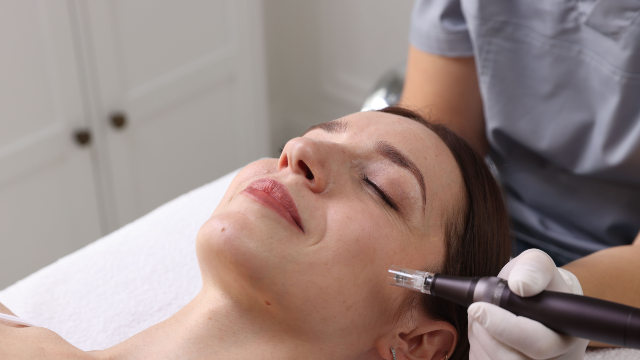
Traditional microneedling, sometimes called collagen induction therapy, uses a device with fine needles — a pen or, in cosmetic-grade form, a roller — to create many tiny, controlled punctures in the skin. These micro-injuries are superficial by design. The body responds to them the way it responds to any minor wound: by triggering a repair cascade that includes new collagen and elastin formation. Over a course of sessions, that repair response can improve surface texture, tone, and the appearance of fine lines and shallow scarring.
The defining feature of traditional microneedling is that its entire effect comes from the mechanical action of the needles. There is no added energy source. Its reach is therefore limited to the tissue the needles physically disturb, which is generally the more superficial layers of the skin. That makes it a reasonable tool for surface concerns, but it is inherently less able to target deeper structural laxity than a treatment that adds energy.
It is worth noting that regulatory status varies within this category. Some microneedling pen devices are US-FDA-cleared as medical devices, while other tools sold for at-home or cosmetic use are not cleared for the same medical indications. If regulatory status matters to you, the specific device used is what determines it — not the general word "microneedling."
How Potenza RF Microneedling Works
Potenza is a radiofrequency microneedling device. It combines ultrafine needles with radiofrequency energy, delivering that energy through the needles into targeted skin depths. The needling component does what traditional microneedling does — it creates controlled micro-channels that trigger the skin's natural repair response. The radiofrequency component then adds controlled heat into the layers the needle tips reach, and that thermal energy encourages collagen contraction and remodeling more deeply than needling alone typically achieves.
The practical consequence is that RF microneedling works through two mechanisms at once rather than one. As a device fact from the manufacturer, Potenza is described as the first FDA-cleared four-mode RF microneedling system, meaning it can deliver monopolar and bipolar radiofrequency in configurations suited to different skin layers and concerns. That is a descriptor of the device and its clearance from the maker, not a marketing claim in the clinic's voice. What it means in plain terms is that the depth and the energy can be adjusted, so a single treatment can be tailored to a range of concerns within one session rather than being locked to a single fixed setting.
Side-by-Side: The Practical Trade-Offs
Depth and mechanism (needling alone vs needling plus RF)
This is the heart of the comparison. Traditional microneedling relies on the mechanical needling stimulus near the surface. Potenza adds radiofrequency energy delivered through the needle tips into deeper layers, combining the needling stimulus with controlled thermal energy. That is why RF microneedling is often discussed for firmness and remodeling — concerns that involve deeper structure — and not just superficial texture. The difference is genuinely one of depth and mechanism, not merely branding.
What each is typically discussed for
Both are used for skin quality, but the emphasis differs. Traditional microneedling is commonly discussed for surface texture, tone, enlarged pores, and shallow scarring, where the mechanical repair response is the main driver. RF microneedling is discussed for those concerns as well, plus mild skin laxity and deeper remodeling, because the added thermal energy can act at depth. Neither description is a rule you can apply to yourself; the appropriate tool for a given concern is a clinical decision.
Downtime and recovery
Both are minimally invasive procedures with generally short recovery, and both commonly produce temporary redness, mild swelling, or pinpoint marks in the day or days afterward. Because RF microneedling adds thermal energy, some patients may experience a bit more redness or swelling than they would from needling alone, though this varies with the settings used and the individual. In both cases, the specific downtime depends on the depth and intensity chosen for your skin, which is why the clinic's own post-treatment guidance should take precedence over any general expectation.
Number of sessions
Neither treatment is a single-session fix. Both work by stimulating your own skin to remodel over time, so collagen-driven improvement accumulates across a course of sessions rather than completing after one visit. The number of sessions and any maintenance is individualized and determined at consultation based on your skin condition and goals. This is true for both categories, so the session count is not, on its own, a reason to choose one over the other.
Customization
A meaningful practical difference is the range of adjustment. Because Potenza can operate in different RF modes and be set to different needle depths and energy levels, it offers a wider set of parameters to tailor to a specific concern. Beautiful Story Clinic notes that it customizes Potenza's settings — including depth and energy — to each patient's skin condition, treatment area, and goals, rather than applying a single fixed protocol. Traditional microneedling can also be adjusted in depth, but it does not have an energy dimension to tune.
Which Might Suit Which Goal
Because both are individualized, no article can tell you which to pick. But the honest framing is this: if the concern is primarily superficial texture and tone, needling alone may be a reasonable option; if the concern also involves firmness, mild laxity, or deeper remodeling, the added radiofrequency energy of a device like Potenza is often what that conversation turns toward. Many patients have more than one concern, and the assessment is where the right approach — or the reason neither is suitable — is identified.
It is also worth being clear about what neither treatment is for. Microneedling of any kind is aimed at skin quality and remodeling, not at adding volume. If your primary concern is a hollow cheek or a deep fold that needs to be physically filled, a microneedling device is not the right tool, and a consultation is where a more appropriate approach would be identified.
Who May Not Be Suitable
Neither treatment is appropriate for everyone. Active skin infection or significant inflammation in the treatment area, certain medical conditions affecting healing, and being determined unsuitable after clinical assessment are all reasons a treatment may be deferred. More broadly, circumstances such as pregnancy or breastfeeding, autoimmune or bleeding conditions, and known allergies warrant particular caution and should be discussed with the clinic and the treating physician. Because an article cannot examine your skin or review your history, candidacy is something only an in-person assessment can determine. This article is not a self-diagnosis tool.
What the Consultation Decides
At Beautiful Story Clinic, every plan is built through an individual facial analysis with Dr. SEO BINNA, and skin is treated as a multi-layered system rather than a single surface. For a treatment like Potenza, the clinic performs a personalized skin assessment, reviews medical history and concerns, evaluates goals, and develops an individualized plan — including which parameters to use. This is exactly why the "which is better" question cannot be answered in advance: the needle depth and settings appropriate for enlarged pores on one patient differ from those chosen for acne scarring or mild laxity on another, and only an in-person evaluation can match the tool to the face.
Regulatory Status: What US Patients Should Know
Regulatory context is worth stating precisely, because it is a common point of confusion. Potenza is a US-FDA-cleared RF microneedling device; as a manufacturer descriptor, it is noted as the first FDA-cleared four-mode RF microneedling system. Within traditional microneedling, some pen devices are also US-FDA-cleared as medical devices, while other cosmetic or at-home tools are not cleared for the same indications. So "FDA-cleared examples exist" in both categories — but the clearance attaches to a specific device, not to the general technique.
Two caveats matter for US patients. First, "FDA-cleared" is a regulatory term about the device itself; it is not a guarantee of any particular result for an individual, and it does not replace the physician's judgment in planning your treatment. Second, being treated in Seoul means the treatment is delivered under Korean clinical practice and, where a Korean device is used, under the Korean Ministry of Food and Drug Safety (MFDS), which is a separate system from US FDA clearance — one does not imply the other. If regulatory status matters to you, confirm the exact device and its clearance directly with the clinic.
What Neither Option Can Promise
Honesty about limits matters for both. Neither traditional microneedling nor RF microneedling stops the aging process, and neither produces a guaranteed or fixed amount of improvement. Results build gradually because they come from your own skin remodeling over time, they vary between individuals, and no single session should be expected to deliver a dramatic overnight change. Both carry risks: temporary redness, mild swelling, tenderness, pinpoint bleeding, or minor skin sensitivity can occur, and less common complications should be discussed with the treating physician. Listing these is not meant to alarm but to set accurate expectations — some redness and temporary marks are a normal part of the process, not a sign that something went wrong.
A Note on Cost
Cost is a natural question, and this guide deliberately does not answer it with figures. Pricing depends on factors only a consultation can determine — the number of sessions in your plan, the treatment areas, and how the parameters are customized for your skin. Rather than anchoring on a number found elsewhere, treat cost as a qualitative matter to discuss directly with the clinic once you understand what your specific plan would involve. The clinic is the right source for pricing tailored to your situation.
Bottom Line
Traditional microneedling and Potenza RF microneedling are related but distinct tools. Traditional microneedling uses needles alone to create micro-injuries that prompt collagen production near the surface, making it a reasonable option for texture and tone. Potenza adds radiofrequency energy delivered through the needles into deeper layers, combining the needling stimulus with controlled thermal energy that can target firmness and remodeling more deeply. Both are minimally invasive, both usually need a course of sessions, both carry temporary risks, and FDA-cleared examples exist in each category — so neither is inherently "more legitimate." Because candidacy depends on your specific skin and goals, the right choice is the one reached with Dr. Seo after an individualized assessment, not one made in advance from a chart.
Frequently Asked Questions
**Is RF microneedling better than traditional microneedling?**Neither is universally better. Traditional microneedling uses needles alone to stimulate collagen near the surface, while RF microneedling like Potenza adds radiofrequency energy through the needles to reach deeper layers for firmness and remodeling. The appropriate choice depends on your specific concern and skin, and it is determined at an individualized consultation.
**What does the radiofrequency actually add?**It adds controlled thermal energy delivered through the needle tips into deeper skin layers. That heat encourages collagen contraction and remodeling more deeply than needling alone typically achieves, which is why RF microneedling is often discussed for firmness and mild laxity, not just surface texture.
**Are both microneedling and Potenza FDA-cleared?**FDA-cleared examples exist in both categories. Potenza is a US-FDA-cleared RF microneedling device, and some traditional microneedling pen devices are also FDA-cleared, though other cosmetic or at-home tools are not. Clearance attaches to a specific device and is not a guarantee of any individual result.
**How many sessions will I need?**Both treatments typically require a course of sessions because collagen remodeling accumulates over time rather than completing in one visit. The exact number and any maintenance are individualized and determined at consultation based on your skin condition and goals.
**Which is better for acne scars?**Both are discussed for acne scarring, and the better fit depends on the scar type and depth. Deeper or more structural scarring is often part of the conversation around RF microneedling, while shallow textural concerns may respond to needling alone. Results appear gradually and vary; a consultation determines what suits your skin.
**What is the downtime?**Both are minimally invasive with generally short recovery, commonly involving temporary redness, mild swelling, or pinpoint marks. RF microneedling may involve slightly more redness in some cases because of the added thermal energy. Follow the clinic's aftercare instructions and contact them if anything is persistent or unusual.
This article is for general education only and is not a self-diagnosis tool or a substitute for professional medical advice. Whether traditional microneedling, Potenza RF microneedling, or neither is appropriate for you can only be determined through an in-person consultation and individualized facial assessment with Dr. SEO BINNA. Results vary between individuals, no outcome is guaranteed, and both approaches carry risks that should be discussed with your physician. Medical-device regulatory status differs by country; US FDA clearance and Korea's MFDS clearance are separate systems, and you should confirm the specific device used with the clinic.
Clinical References & Related Hospital Guides
- Related Clinic Pages: About Our Clinic & Safety Standards · Clinical Centers & Specialties · 1:1 Consultation & Appointment Inquiry
- Authoritative Medical References: American Society of Plastic Surgeons (ASPS) · Korean Society of Plastic and Reconstructive Surgeons (KSPRS)
More Articles
Continue reading our clinical guides.

Dr. SEO BINNA Guide To Seoul Plastic Surgery Excellence
Learn why Dr SEO BINNA is the premier choice for lifting and surgery in Seoul. Discover Beautiful Story Clinic for expert care and natural results.
Learn More
Stem Cell Skin Treatment Korea 2026 Clinical Guide
Discover the definitive 2026 guide to stem cell skin treatment in Korea at Beautiful Story Clinic. Learn about IV therapy and fat grafting safety.
Learn More

Oligio RF Korea Results Cost and Professional Guide 2026
Discover the benefits of Oligio RF Korea for non surgical skin tightening. Learn about results and costs in Seoul versus the USA from Dr. SEO BINNA today.
Learn More