Beauty Story Clinic Gangnam — Personalized 1:1 Aesthetic Care & Anti-Aging Specialists

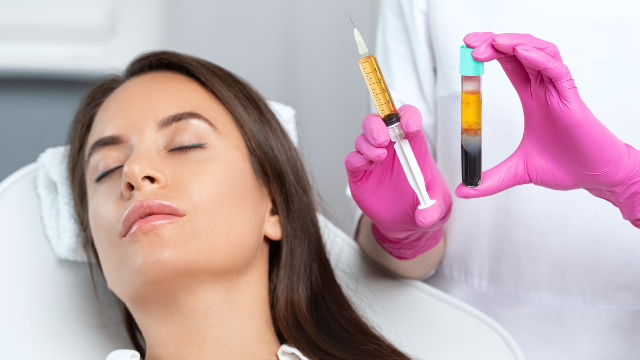
Medical Guide
Skin Boosters 101: The Difference Between Fillers and Regenerative Injectables
Fillers vs regenerative injectables explained: HA volumizers, Sculptra, Radiesse, Rejuran and Juvelook, with precise US FDA status.
Schedule a ConsultationSkin Boosters 101: The Difference Between Fillers and Regenerative Injectables
Medically reviewed by Dr. SEO BINNA, Korean Board-Certified Plastic Surgeon
If you have researched injectable skin treatments, you have probably noticed that the words "filler," "skin booster," and "regenerative injectable" are often used as if they mean the same thing. They do not. These products work through different biological mechanisms, sit at different depths, and carry very different regulatory status in the United States. Understanding those differences is the single most useful thing you can do before a consultation, because it changes what you should expect, how long results may last, and what questions you should ask.
At Beautiful Story Clinic in Gangnam, Seoul, we treat many patients who travel from the United States, and one of the most common points of confusion is the assumption that all injectables are interchangeable. This article is an educational overview of the two broad families of injectable treatments, how they differ, and where each product stands with the US Food and Drug Administration (FDA). It is not a self-diagnosis tool and it is not a substitute for an in-person evaluation. Results vary from person to person, and no injectable can be guaranteed to produce a specific outcome.
The two broad families: volumizing versus regenerative
Injectable aesthetic products can be grouped into two broad categories based on how they create a visible change.
Volumizing fillers add physical volume immediately. The most common are made of hyaluronic acid (HA), a sugar molecule that naturally occurs in skin and holds water. When injected, an HA filler lifts and supports tissue right away, which is why it is often used for lips, cheeks, and folds. A defining and reassuring feature of HA fillers is that they can be dissolved with an enzyme called hyaluronidase if the result needs to be adjusted or corrected.
Regenerative injectables work differently. Rather than adding lasting bulk of their own, they are designed to stimulate the skin's own repair processes so that the body gradually produces more of its own collagen and other structural components over weeks to months. Because the change is biological and gradual, these products do not deliver an instant "filled" look. Instead, patients typically see a slow improvement in skin quality, firmness, or thickness across a series of sessions. The trade-off is that the effect is generally not quickly reversible the way an HA filler is.
The term "skin booster" is a marketing umbrella that can refer to either family, which is exactly why it causes confusion. Some skin boosters are simply thin HA products meant to hydrate the skin; others are regenerative products meant to stimulate collagen. Always ask which specific product is being proposed and which category it falls into.
Hyaluronic acid fillers: immediate, adjustable volume
HA fillers are among the most widely studied injectables. According to Mayo Clinic, soft tissue fillers can smooth wrinkles and add volume, with results that are temporary because the material is gradually absorbed by the body. The main appeal is predictability: the change is visible at the visit, and because HA can be dissolved, there is a built-in safety margin if placement needs correction.
HA fillers are not without risk. Common, usually temporary effects include swelling, bruising, redness, and tenderness. Rare but serious complications include accidental injection into a blood vessel, which is why product selection and injector skill matter so much. HA fillers are best understood as a volume tool rather than a skin-quality tool.
Collagen-stimulating and regenerative injectables
This is where precision matters most, because the products in this group differ sharply in their US regulatory status. Beautiful Story Clinic uses products at full clinical dosages and selects them individually per patient, but no clinic can change a product's FDA status, and we believe patients deserve to know it plainly.
Sculptra (poly-L-lactic acid, PLLA) — FDA-approved
Sculptra is made of poly-L-lactic acid (PLLA), a biocompatible, biodegradable material. It is FDA-approved as a collagen stimulator, and its effect develops gradually as the body responds by producing collagen over time. As StatPearls notes, PLLA is used to restore volume that is lost with facial fat and collagen changes, and its results build across multiple sessions rather than appearing at once. Because the improvement is gradual, patience and a realistic timeline are essential.
Radiesse (calcium hydroxylapatite, CaHA) — FDA-approved
Radiesse is made of calcium hydroxylapatite (CaHA) microspheres suspended in a gel. It is FDA-approved as a dermal filler and volumizer, and it also has a collagen-stimulating component. Two points are critical and often misunderstood. First, Radiesse is not reversible with hyaluronidase, because it is not a hyaluronic acid product; once placed, it cannot be dissolved the way HA can. Second, Radiesse is not indicated for the lips. Anyone offering CaHA in a way that ignores these facts is not describing the product accurately.
Rejuran (polynucleotide / PDRN) — NOT FDA-approved
Rejuran is a polynucleotide product, sometimes described using the term PDRN (polydeoxyribonucleotide). It is popular in Korea and is offered in Seoul, including at our clinic, under Korean Ministry of Food and Drug Safety (MFDS) regulation. It is important to state clearly that injectable Rejuran is not FDA-approved in the United States. The FDA issued a caution regarding these products in 2022. Patients should also understand that the injectable form is distinct from topical cosmetic products that reference PDRN; the two are not the same and should not be conflated.
Juvelook (poly-D,L-lactic acid, PDLLA) — NOT FDA-approved
Juvelook is a poly-D,L-lactic acid (PDLLA) product offered in Seoul under MFDS regulation. It is not FDA-approved. It is easy to assume Juvelook is "the same as Sculptra" because both involve lactic-acid-based polymers, but they are different products with different formulations and different regulatory standing. Juvelook is a PDLLA product; Sculptra is a PLLA product that is FDA-approved. We do not equate the two, and neither should any marketing material you encounter.
Why FDA status should shape your questions, not scare you
Seeing "not FDA-approved" next to a popular product can feel alarming, but it deserves a measured interpretation. FDA approval or clearance is a US regulatory process. A product can be legally approved by Korea's MFDS or carry a European CE mark and still not have gone through the separate US FDA pathway. That is a statement about regulatory jurisdiction, not automatically a verdict on a product's overall profile.
What it means practically is this: if you are a US patient considering a treatment in Seoul, you should know which products are FDA-approved and which are not, so you can make an informed decision with your own risk tolerance in mind. It also means you should be skeptical of any claim that a Seoul-offered product is "FDA-approved" when it is not. Accuracy protects you. Our role is to be transparent about which category a given product falls into, discuss the realistic benefits and risks, and let you decide with full information.
How results and timelines compare
The most useful mental model is speed versus gradual change. HA fillers give an immediate, adjustable result that is temporary and eventually absorbed. Collagen-stimulating and regenerative products give a gradual, biology-driven change that develops over weeks to months and typically requires a series of sessions. Neither approach is universally "better"; they solve different problems. Volume loss in a cheek is a different concern than overall thinning or crepey skin texture, and the right tool depends on your anatomy and goals.
Across all of these products, results vary. Factors such as your baseline skin, age, lifestyle, sun exposure, and individual healing response all influence what you will see. No injectable can be promised to erase a wrinkle, cure aging, or deliver a fixed result. Anyone who guarantees an outcome is overstating what any injectable can do.
It is also common for a plan to combine categories rather than choose only one. A patient with both volume loss and thinning skin might, over time, address structure with a filler and skin quality with a regenerative approach, sequenced carefully rather than layered all at once. That is a decision for a physician to make with you in person, weighing your anatomy, your history, and how your skin responds. The point of understanding the categories is not to pick a product from a menu on your own, but to arrive at a consultation able to ask sharper questions and to recognize when a claim does not add up.
Realistic risks and aftercare
All injectables carry some risk. The most common effects are temporary swelling, bruising, redness, and tenderness at the injection sites. Collagen-stimulating products can occasionally produce small lumps or nodules under the skin, and proper technique and product handling reduce that risk. Rare but serious complications, including vascular events, are why the training and judgment of the person injecting are so important. Our clinic provides guidance on managing bruising and swelling after treatment, and we ask patients to report anything unexpected promptly.
Because these are medical procedures, the setting matters. Physician oversight, an honest discussion of your candidacy, and realistic expectations are more valuable than any single "trending" product. If a plan is built around a product that is not right for your anatomy, no amount of skill will make it the right choice.
How we approach injectable planning at Beautiful Story Clinic
Beautiful Story Clinic uses individualized facial analysis rather than pre-packaged protocols, so product selection follows your anatomy and goals rather than a one-size-fits-all menu. Our one-patient-per-hour system is intended to give uninterrupted clinical time for assessment and treatment, and Dr. SEO BINNA provides direct physician oversight. We use products at full clinical dosages and we are candid about which products are FDA-approved and which are offered under Korean MFDS regulation.
We do not make cost claims here, and we do not promise specific results. What we can offer is a transparent, individualized discussion so you understand the category, the mechanism, and the regulatory status of anything proposed for you.
Bottom Line
Fillers and regenerative injectables are not the same. HA fillers add immediate, adjustable volume and can be dissolved; regenerative and collagen-stimulating products work gradually by prompting your own tissue to rebuild. On US FDA status, Sculptra (PLLA) and Radiesse (CaHA) are FDA-approved, while Rejuran (PDRN) and Juvelook (PDLLA) are not FDA-approved and are offered in Seoul under MFDS regulation. Radiesse is not hyaluronidase-reversible and is not for the lips, and Juvelook should never be equated with Sculptra. Results vary, risks are real, and nothing here is a guarantee or a self-diagnosis tool. The right next step is an in-person consultation with a qualified physician.
Frequently Asked Questions
**Is a skin booster the same as a filler?**Not necessarily. "Skin booster" is an umbrella term. Some skin boosters are thin HA products meant mainly to hydrate, while others are regenerative products meant to stimulate your own collagen. Always ask which specific product is proposed and which category it belongs to.
**Which of these products are FDA-approved?**Among the products discussed here, Sculptra (PLLA) and Radiesse (CaHA) are FDA-approved. Rejuran (PDRN) and Juvelook (PDLLA) are not FDA-approved; they are offered in Seoul under Korea's MFDS regulation.
**Is Juvelook just the Korean version of Sculptra?**No. Although both involve lactic-acid-based polymers, Juvelook is a PDLLA product and Sculptra is a PLLA product. They have different formulations and different regulatory status, and they should not be treated as equivalent.
**Can regenerative injectables be dissolved if I do not like the result?**Generally no. Unlike HA fillers, which can be dissolved with hyaluronidase, collagen-stimulating and regenerative products are not quickly reversible. Radiesse in particular cannot be dissolved with hyaluronidase. This is one reason careful planning matters.
**How soon will I see results?**HA fillers show volume immediately. Regenerative and collagen-stimulating products work gradually over weeks to months and usually require a series of sessions. Timelines and outcomes vary by individual, and no result can be guaranteed.
This article is for general education only. It is not a self-diagnosis tool and does not replace an in-person medical evaluation. Please consult a qualified physician about your individual situation.
Clinical References & Related Hospital Guides
- Related Clinic Pages: About Our Clinic & Safety Standards · Clinical Centers & Specialties · 1:1 Consultation & Appointment Inquiry
- Authoritative Medical References: American Academy of Dermatology (AAD) · NCBI PubMed Clinical Literature
More Articles
Continue reading our clinical guides.

Dr. SEO BINNA Guide To Seoul Plastic Surgery Excellence
Learn why Dr SEO BINNA is the premier choice for lifting and surgery in Seoul. Discover Beautiful Story Clinic for expert care and natural results.
Learn More
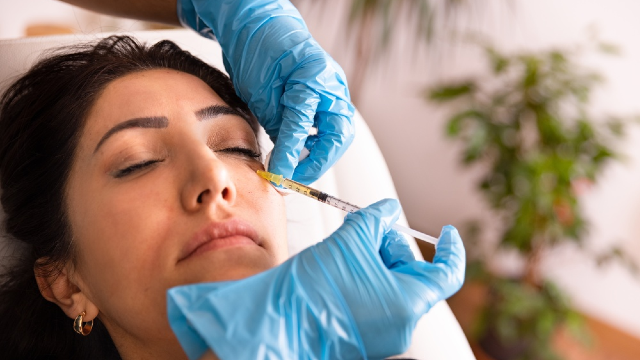
Stem Cell Skin Treatment Korea 2026 Clinical Guide
Discover the definitive 2026 guide to stem cell skin treatment in Korea at Beautiful Story Clinic. Learn about IV therapy and fat grafting safety.
Learn More

Oligio RF Korea Results Cost and Professional Guide 2026
Discover the benefits of Oligio RF Korea for non surgical skin tightening. Learn about results and costs in Seoul versus the USA from Dr. SEO BINNA today.
Learn More