Beauty Story Clinic Gangnam — Personalized 1:1 Aesthetic Care & Anti-Aging Specialists

Medical Guide
Thread Lifting vs Energy-Based Lifting: Which Non-Surgical Option Is Right for You
An evenhanded comparison of thread lifting vs RF and HIFU energy lifting — mechanisms, downtime, longevity, and candidacy. Reviewed by Dr. SEO BINNA.
Schedule a ConsultationThread Lifting vs Energy-Based Lifting: Which Non-Surgical Option Is Right for You
Medically reviewed by Dr. SEO BINNA, Korean Board-Certified Plastic Surgeon
Patients researching non-surgical lifting in Korea usually arrive at the same fork in the road: thread lifting or an energy-based device such as radiofrequency (RF) or high-intensity focused ultrasound (HIFU)? It is a fair question, and the honest answer is that neither category is universally "better." They work in fundamentally different ways, they suit different faces and different timelines, and in some plans they are used together rather than as either/or. This guide lays out the trade-offs evenhandedly so you can have a more informed conversation at your consultation.
This is an educational overview and a decision framework, not a self-diagnosis tool. Which approach fits you depends on your degree and type of laxity, your skin quality, your goals, and your schedule — none of which can be assessed from an article. At Beautiful Story Clinic in Gangnam, Seoul, every treatment is personally planned and performed by Dr. SEO BINNA after an individualized facial assessment, and the right choice is always individualized rather than pre-decided.
The Core Difference in One Paragraph
Thread lifting physically repositions tissue and adds gradual collagen support, while energy-based lifting stimulates collagen remodeling without moving tissue mechanically. That single distinction drives almost every other difference between them — the immediacy of the result, the downtime, and who is a good candidate. Everything below unpacks that idea.
How Thread Lifting Works
Thread lifting is a minimally invasive procedure that uses fine, dissolvable threads inserted beneath the skin. It works through two mechanisms at once. First, the threads deliver an immediate mechanical lift by repositioning facial tissue that has descended with age — this is the "immediate lift" part of the "immediate lift vs gradual lift" comparison. Second, as the threads gradually dissolve, they stimulate the body's own collagen formation, supporting skin firmness over the following weeks and months. Because threads physically move tissue along chosen vectors, they can produce a repositioning effect that energy devices, which do not move tissue, cannot.
Thread lifting requires no large incisions and no general anesthesia. Comfort is typically managed with topical, local, or (depending on the plan) sleep anesthesia. It is more invasive than an energy treatment because threads are physically placed under the skin, which is why bruising and swelling are more commonly part of the recovery.
How Energy-Based Lifting Works
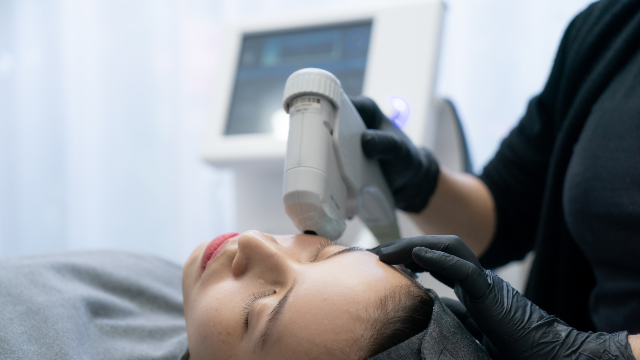
Energy-based lifting is a family of non-surgical, non-injected treatments that deliver controlled energy beneath the skin surface to heat tissue in a targeted way, triggering collagen contraction and gradual collagen and elastin remodeling. Two main energy types are used:
- Radiofrequency (RF) delivers controlled heat into the dermal layers to promote collagen contraction and regeneration over time.
- High-intensity focused ultrasound (HIFU) delivers focused ultrasound to create small, controlled thermal zones at specific depths, stimulating tissue contraction and collagen remodeling.
The defining feature of energy-based lifting is that it does not mechanically reposition tissue and generally produces little to no immediate mechanical lift. Instead, the improvement develops gradually as collagen remodels over weeks to months. In exchange, these treatments typically involve little or no downtime, which is a major reason patients choose them.
Side-by-Side: The Practical Trade-Offs
Immediacy of result (immediate lift vs gradual lift)
Thread lifting produces an immediate, visible repositioning right after placement, which then continues to be supported by collagen. Energy-based lifting is gradual by design: there is usually no meaningful immediate lift, and results build over the following weeks and months. If seeing an immediate change matters to you, that favors threads; if you are comfortable waiting for a gradual improvement, energy devices fit that expectation.
Downtime and recovery (thread lifting recovery vs RF recovery)
This is one of the clearest contrasts. Thread lifting recovery is generally mild but more involved: temporary swelling, bruising, tenderness, or a pulling sensation may occur and usually settle within a few days, and the clinic uses aftercare protocols to help manage bruising and swelling. Energy-based treatments generally involve little or no downtime — many patients return to normal activities the same day or the next — with common temporary effects being redness, warmth, or mild swelling for a short period. So for a "thread lifting recovery vs RF recovery" comparison, RF and HIFU usually win on minimal downtime, while threads trade a bit more recovery for an immediate mechanical lift.
Type and degree of laxity (candidacy)
Candidacy is where the choice becomes genuinely individual. Both categories are generally aimed at mild to moderate skin laxity, not advanced sagging that would call for surgical evaluation. Broadly:
- Threads can be useful when there is descended tissue that would benefit from physical repositioning — for example, sagging cheeks, softening jawline, or brow heaviness in appropriate candidates.
- Energy devices can be useful when the priority is overall skin tightening, firmness, and collagen quality rather than moving a specific descended structure, and when the patient prefers no downtime.
Neither description is a rule you can apply to yourself. The degree and pattern of laxity, skin thickness, and facial structure all factor in, and only an in-person assessment can determine which approach — or combination — is appropriate.
Longevity
Both approaches produce results that develop and then gradually fade; neither is permanent. For energy-based lifting, the clinic's documented pattern is that skin tightening continues to develop as collagen remodels over weeks to months, with noticeable improvement often seen by about three months, and maintenance treatments may be recommended over time. For thread lifting, the mechanical lift is immediate while collagen support builds afterward, and longevity varies with the material and the individual; as one documented reference point, the clinic reports its forehead-and-brow thread results typically last about 10 to 18 months. Exact longevity for either approach is individualized, so maintenance planning is best discussed at consultation. Neither category should be presented as lasting longer "as a rule" — it depends on the person and the specific treatment.
Invasiveness and comfort
Energy-based treatments are non-invasive or minimally invasive and often need only topical anesthetic or none at all. Thread lifting is minimally invasive but does involve placing threads under the skin, so it sits a step higher on the invasiveness scale and more commonly involves managed bruising and swelling.
They Can Be Complementary, Not Just Alternatives
An important point that gets lost in "versus" framing: threads and energy devices are not mutually exclusive. Because they work through different mechanisms — mechanical repositioning plus collagen for threads, collagen remodeling without repositioning for energy — they can address different aspects of facial aging, and a plan may reasonably use both, either on the same day or in staged visits. Beautiful Story Clinic's documented practice includes individualized plans that may involve a single treatment, same-day combinations, or staged protocols, and its thread-lifting material notes that thread lifting may be combined with energy-based treatments such as focused-ultrasound lifting when appropriate. So "combining threads and RF" (or threads and HIFU) is a legitimate option for some patients, decided case by case. The point is not that combining is always better; it is that the categories are tools, and the plan is matched to the face.
Regulatory Status: FDA-Cleared Examples Exist in Both Categories
If US FDA status is part of your decision, it is worth knowing that FDA-cleared examples exist on both sides of this comparison — which is another reason neither category is inherently "more legitimate" than the other.
- Threads: MINT PDO (polydioxanone) threads hold US FDA 510(k) clearances, and Silhouette InstaLift (PLLA, poly-L-lactic acid) is US-FDA-cleared for cosmetic facial procedures. (Note that "Silhouette Soft" is the international/CE version and is not FDA-cleared.)
- Energy: InMode's RF platforms are US-FDA-cleared for skin tightening and tissue remodeling, and Ultherapy is the US-FDA-cleared micro-focused-ultrasound (HIFU) device.
These are product and device facts about the US market. They do not describe which specific devices are used at a clinic in Seoul. The specific Korean devices in Beautiful Story Clinic's lifting menu — for example, Titanium Lifting (a near-infrared laser treatment), Density Lifting (6.78 MHz monopolar RF), Corage Cell Fit / XERF (resonant RF), and Linear Firm (linear-shot HIFU on the ULTRAcel Q+ platform), along with its thread products — are provided under Korean regulation through the Ministry of Food and Drug Safety (MFDS). Korean MFDS clearance and US FDA clearance are separate systems, and one does not imply the other. If regulatory status matters to you, confirm the exact device or product and its clearance directly with the clinic.
A Simple Way to Think About the Decision
Because both options are individualized, no article can tell you which to pick. But a few honest questions can frame the consultation:
- Do you want an immediate, visible change, or are you comfortable with gradual improvement? Immediate favors threads; gradual is normal for energy devices.
- How much downtime can you accommodate? Little to none favors energy-based treatments; threads may involve a few days of swelling or bruising.
- Is the concern descended tissue that needs repositioning, or overall skin firmness and quality? The former leans toward threads, the latter toward energy — though many faces have both.
- Would a combination address more than one concern? Sometimes yes, decided case by case.
These are starting points, not a self-diagnosis. The actual answer comes from an individualized facial assessment. This article is not a self-diagnosis tool.
What Neither Option Can Promise
For both categories, honesty about limits matters. Neither thread lifting nor energy-based lifting is a permanent treatment, and neither is equivalent to a surgical facelift; both are aimed at mild to moderate laxity, and results vary between individuals. No specific percentage of improvement, guaranteed result, or "wrinkle removal" should be promised for either approach. Both carry risks: energy devices can cause temporary redness, warmth, mild swelling, and rarely burns; threads can cause bruising, swelling, tenderness, dimpling or puckering, and rarely thread extrusion or asymmetry. A full, individualized discussion of benefits and risks is part of the consultation.
Bottom Line
Thread lifting and energy-based lifting are different tools, not competitors with a single winner. Threads mechanically reposition tissue and add gradual collagen support, giving a more immediate lift at the cost of a bit more downtime; RF and HIFU energy devices stimulate gradual collagen remodeling without repositioning tissue, offering little to no downtime but no immediate mechanical lift. Candidacy, longevity, and downtime all depend on your specific laxity and goals, FDA-cleared examples exist in both categories, and the two can even be complementary in a staged or same-day plan. Because the choice is genuinely individual, the right decision is the one reached with Dr. Seo after an individualized facial assessment — not one made in advance from a comparison chart.
Frequently Asked Questions
**Which is better, thread lifting or energy-based lifting?**Neither is universally better. They work differently — threads reposition tissue mechanically and add collagen support, while RF and HIFU stimulate gradual collagen remodeling without repositioning. The appropriate choice depends on your degree and type of laxity, your goals, and your downtime tolerance, and it is determined at an individualized consultation.
**Which has more downtime?**Thread lifting generally involves more recovery — temporary swelling, bruising, or a pulling sensation for a few days — while energy-based treatments usually involve little or no downtime, with short-lived redness or warmth. This is one of the clearest differences between the two.
**Which gives faster results?**Thread lifting produces an immediate mechanical lift right after placement, then continues with collagen support. Energy-based lifting is gradual, with improvement developing over weeks to months as collagen remodels. Neither is permanent.
**Can thread lifting and RF or HIFU be combined?**Yes, for some patients. Because they use different mechanisms, they can address different aspects of aging, and plans may use both in the same day or in staged visits. Whether combining benefits you is a case-by-case decision made at consultation.
**Are these treatments FDA-cleared?**FDA-cleared examples exist in both categories — MINT PDO and Silhouette InstaLift (PLLA) among threads, and InMode RF and Ultherapy HIFU among energy devices. The specific devices and products used at Beautiful Story Clinic in Seoul are regulated under Korea's MFDS, which is separate from US FDA clearance; confirm the exact device or product with the clinic.
**How long do results last?**Both develop and then gradually fade, and longevity is individualized. Energy-based improvement often becomes noticeable by about three months and may need maintenance; the clinic's forehead-and-brow thread results are reported at roughly 10 to 18 months. Your maintenance plan should be discussed at consultation.
This article is for general education only and is not a self-diagnosis tool or a substitute for professional medical advice. Whether thread lifting, energy-based lifting, or a combination is appropriate for you can only be determined through an in-person consultation and individualized facial assessment with Dr. SEO BINNA. Results vary between individuals, no outcome is guaranteed, and both approaches carry risks that should be discussed with your physician. Medical-device regulatory status differs by country; US FDA clearance and Korea's MFDS clearance are separate systems, and you should confirm the specific device or product used with the clinic.
Clinical References & Related Hospital Guides
- Related Clinic Pages: About Our Clinic & Safety Standards · Clinical Centers & Specialties · 1:1 Consultation & Appointment Inquiry
- Authoritative Medical References: American Society of Plastic Surgeons (ASPS) · Korean Society of Plastic and Reconstructive Surgeons (KSPRS)
More Articles
Continue reading our clinical guides.

Dr. SEO BINNA Guide To Seoul Plastic Surgery Excellence
Learn why Dr SEO BINNA is the premier choice for lifting and surgery in Seoul. Discover Beautiful Story Clinic for expert care and natural results.
Learn More
Stem Cell Skin Treatment Korea 2026 Clinical Guide
Discover the definitive 2026 guide to stem cell skin treatment in Korea at Beautiful Story Clinic. Learn about IV therapy and fat grafting safety.
Learn More

Oligio RF Korea Results Cost and Professional Guide 2026
Discover the benefits of Oligio RF Korea for non surgical skin tightening. Learn about results and costs in Seoul versus the USA from Dr. SEO BINNA today.
Learn More