Beauty Story Clinic Gangnam — Personalized 1:1 Aesthetic Care & Anti-Aging Specialists

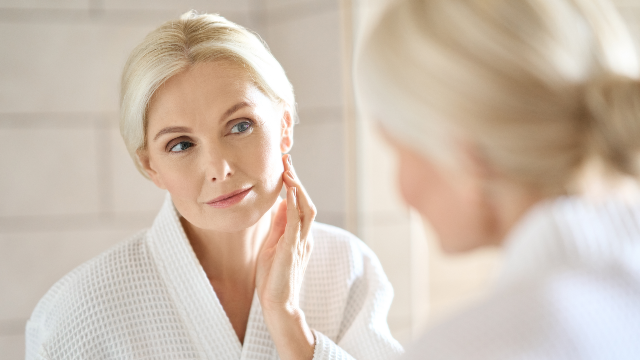
Medical Guide
Understanding Skin Laxity: When Non-Surgical Lifting Is Enough
Learn what causes skin laxity, when RF or HIFU tightening may help, and when surgery fits. Educational, individualized, results vary.
Schedule a ConsultationUnderstanding Skin Laxity: When Non-Surgical Lifting Is Enough
Medically reviewed by Dr. SEO BINNA, Korean Board-Certified Plastic Surgeon
Skin laxity is one of the most common reasons people begin exploring aesthetic treatments, yet it is also one of the most misunderstood. Many patients hear "skin tightening" and assume every device produces the same lift, or that a non-surgical session can replace surgery entirely. The reality is more nuanced. Some degrees of laxity respond well to energy-based tightening, while more advanced sagging is better addressed through surgical approaches. This article explains what skin laxity is, why it develops, and how clinicians think about matching the right approach to the right stage.
This is an educational overview, not a diagnosis or a self-assessment tool. No article can tell you which treatment is appropriate for your face or body. Skin behaves differently in every individual, and only an in-person evaluation by a qualified physician can determine what, if anything, may suit your anatomy and goals.
What Is Skin Laxity?
Skin laxity refers to the loss of firmness and elasticity that allows skin to sag, fold, or appear loose. Young skin has a resilient scaffolding built largely from two proteins: collagen, which provides structural strength, and elastin, which allows the skin to stretch and snap back. When this scaffolding weakens, skin no longer recoils the way it once did, and gravity gradually pulls tissue downward.
Laxity is not limited to the surface. The face and body are layered structures that include skin, fat compartments, connective tissue, muscle, and bone. Aging affects every layer. Fat pads shift and deflate, ligaments loosen, and bone remodels over time. What looks like "loose skin" is frequently the combined result of changes across several of these layers, which is one reason a single treatment rarely reverses all signs of aging at once.
Common areas where people first notice laxity include the lower face and jawline, the neck, the area beneath the chin, the cheeks, and around the eyes. On the body, the abdomen, upper arms, and knees are frequent concerns, especially after significant weight change or pregnancy.
It also helps to separate laxity from related but distinct concerns. Volume loss, in which deflated fat pads leave hollows and shadows, is not the same as loose skin, even though the two often appear together. Fine lines and surface texture changes are yet another category. Because these problems have different causes, they typically call for different approaches, and a treatment aimed at one may do little for another. This is part of why a careful, in-person assessment matters more than a single-word label like "sagging."
Why Skin Loses Its Firmness
Understanding the causes of laxity helps set realistic expectations about what treatment can and cannot do. According to health resources such as Mayo Clinic, skin aging is driven by a mix of intrinsic and extrinsic factors, and most people experience some combination of both.
Intrinsic aging is the natural, genetically programmed decline in collagen and elastin production that occurs with time. Beginning in the mid-twenties, collagen synthesis gradually slows, and existing collagen fibers become more fragmented and disorganized. Hormonal shifts, including the drop in estrogen around menopause, can accelerate this loss.
Extrinsic aging comes from external exposures. Chronic ultraviolet exposure, often called photoaging, is among the most significant contributors; it degrades collagen and elastin and generates free radicals that damage the skin's supporting matrix. Smoking, poor nutrition, repeated weight fluctuation, and environmental pollution add to the burden. Genetics also play a meaningful role in how early and how noticeably laxity appears.
Because these processes are cumulative and ongoing, no treatment stops the clock permanently. Even effective procedures address a moment in an evolving process, and skin continues to age afterward. This is why clinicians frame skin tightening as management rather than cure.
How Clinicians Grade Laxity
While there is no single universal scale patients need to memorize, physicians generally think about laxity along a spectrum from mild to advanced. This mental framework guides whether energy-based tightening is a reasonable option or whether surgery is more likely to meet the goal.
Mild laxity typically involves early softening of contours, such as a slightly less defined jawline or subtle looseness in the cheeks, with skin that still has reasonable elasticity. Moderate laxity shows more visible sagging, deeper folds, and the beginning of jowls or neck banding, but without large volumes of excess, hanging skin. Advanced laxity involves significant redundant skin, pronounced jowls, heavy neck folds, or loose tissue that no longer retracts, often accompanied by underlying structural descent.
These categories overlap and are not rigid. Two people with similar photographs can have different skin quality, fat distribution, and bone support, which is why grading is done in person rather than from a picture or a questionnaire.
When Non-Surgical Lifting May Be Enough
Energy-based devices are designed to stimulate the skin's own repair processes rather than to cut and remove tissue. The two most common categories are radiofrequency (RF) and high-intensity focused ultrasound (HIFU). Both deliver controlled energy into the skin and deeper layers to heat tissue at target depths, which can prompt the body to remodel collagen over the following weeks and months.
For mild-to-moderate laxity, these approaches may produce visible firming and modest lifting when a candidate has reasonably good skin quality and realistic goals. They are generally most rewarding for people who want subtle improvement, minimal downtime, and a gradual change rather than a dramatic transformation.
It is important to name device regulatory status accurately, because "FDA" means different things in different countries. In the United States, several RF and ultrasound platforms are FDA-cleared for specific tightening or wrinkle indications. For example, Thermage FLX, a monopolar capacitive RF device, is US-FDA-cleared for treating facial and periorbital wrinkles. InMode RF platforms such as Forma and Morpheus8 are US-FDA-cleared bipolar or multipolar RF systems. Potenza RF microneedling is US-FDA-cleared. Ultherapy PRIME, a microfocused ultrasound system with real-time imaging, is US-FDA-cleared for brow, submental, and neck lift indications and for décolleté lines.
Other energy devices used in Korea are approved by the Korean Ministry of Food and Drug Safety (MFDS) but are not FDA-cleared. Certain Korean-market RF systems and some HIFU devices, for instance, hold MFDS clearance and are offered in Seoul, but they should not be described as FDA-cleared. When a device is named during a consultation, it is reasonable to ask which regulatory clearance it holds and for which indication.
At Beautiful Story Clinic, device selection is customized per patient rather than pre-packaged, and platforms including RF and HIFU are chosen based on individualized facial analysis under the direct oversight of Dr. SEO BINNA. Results vary from person to person, and no device offers a guaranteed outcome.
When Surgery May Be the Better Path
Non-surgical tightening has real limits. Energy devices cannot remove excess skin, and they cannot reposition deep structural tissue the way a surgical lift can. When laxity is advanced, with substantial hanging skin, deep jowls, or pronounced neck laxity, procedures such as a facelift or neck lift are often more likely to achieve the desired change.
Trying to treat advanced laxity with energy devices alone frequently leads to disappointment, because the improvement, if any, is modest relative to the degree of sagging present. A candid consultation should include the possibility that non-surgical options may not be sufficient, and that surgery, with its longer recovery and different risk profile, may be the more realistic route to the goal a patient describes.
The decision is never purely about the skin. It also involves a person's tolerance for downtime, willingness to accept surgical risk, budget, health status, and expectations. There is no universally "best" choice; there is only the choice that fits a specific individual after a thorough evaluation. Surgical procedures are not evaluated under the FDA device framework, and any surgery carries risks that should be discussed in detail with a qualified surgeon.
What a Consultation Actually Assesses
A thorough consultation looks well beyond the surface of the skin. A qualified physician evaluates skin quality and thickness, the degree and pattern of laxity, the distribution of underlying fat, evidence of structural descent, and how the tissue moves and recoils when gently manipulated. Photographs and a review of your history, including sun exposure, weight changes, prior procedures, and general health, add context that a picture alone cannot provide.
Equally important is a conversation about your goals and tolerances. What bothers you most, how much downtime you can accept, and how you feel about surgical versus non-surgical risk all shape the recommendation. A responsible clinician will sometimes conclude that a non-surgical device is a reasonable option, and other times that it is unlikely to meet your expectations. Being told that a treatment may not be enough is a sign of candor, not a sales tactic.
At Beautiful Story Clinic, this individualized facial analysis is the starting point rather than a pre-packaged protocol, with direct physician oversight by Dr. SEO BINNA and, under the clinic's one-patient-per-hour system, uninterrupted clinical time for the evaluation. This structure supports a tailored discussion, but it does not change the underlying reality that outcomes vary and cannot be guaranteed.
Setting Realistic Expectations
Whatever the approach, honesty about outcomes matters. Non-surgical tightening tends to produce gradual, subtle results that build over weeks to months as new collagen forms, and maintenance sessions are often part of the plan. Improvement is typically measured in refinement rather than reversal.
Realistic risks deserve equal attention. Energy-based treatments can cause temporary redness, swelling, tenderness, or a warm sensation, and less commonly bruising or, rarely, more significant effects depending on the device, settings, and individual response. A qualified physician selects settings appropriate to your skin and reviews potential side effects before treatment. Beautiful Story Clinic describes aftercare guidance for issues such as bruising and swelling as part of its individualized approach.
No result is permanent, and no reputable clinician can promise a specific outcome. Skin continues to age, and the underlying causes of laxity remain active. Framing treatment as ongoing management, rather than a one-time fix, protects both your expectations and your satisfaction.
Bottom Line
Skin laxity exists on a spectrum. Mild-to-moderate laxity may respond to energy-based tightening such as RF or HIFU, offering gradual firming with minimal downtime for suitable candidates, while advanced laxity often calls for surgical options that can remove and reposition tissue. Device regulatory status matters: several RF and ultrasound platforms are US-FDA-cleared for specific indications, while various Korean-market devices are MFDS-approved and offered in Seoul but not FDA-cleared. Results vary, no outcome is guaranteed, and the right path is individual. This article is educational and is not a self-diagnosis tool. An in-person consultation with a qualified physician is the only reliable way to determine what may suit you.
Frequently Asked Questions
**Can non-surgical skin tightening replace a facelift?**Not in most cases of advanced laxity. Energy-based devices can firm and modestly lift skin with early-to-moderate looseness, but they cannot remove excess skin or reposition deep tissue the way surgery can. A physician can help you understand where your laxity falls on that spectrum.
**How soon will I see results from RF or HIFU?**Results are gradual. Because these treatments work by stimulating the skin's own collagen-building response over time, visible change typically develops over several weeks to months, and some plans include maintenance sessions. Individual responses vary widely.
**Are the devices used in Seoul the same as those in the United States?**Some are, and some are not. Several RF and ultrasound platforms are US-FDA-cleared, while other energy devices used in Korea are MFDS-approved but not FDA-cleared. Ask which device is proposed for you and what regulatory clearance and indication it carries.
**Is skin tightening permanent?**No. Skin continues to age because the underlying causes of laxity remain active. Treatment is best understood as management that may need to be repeated, not a permanent cure.
**How do I know which option is right for me?**Only an in-person evaluation can answer that. A qualified physician assesses your skin quality, degree of laxity, underlying structure, health, and goals. This article cannot diagnose you or recommend a specific treatment.
Clinical References & Related Hospital Guides
- Related Clinic Pages: About Our Clinic & Safety Standards · Clinical Centers & Specialties · 1:1 Consultation & Appointment Inquiry
- Authoritative Medical References: American Academy of Dermatology (AAD) · NCBI PubMed Clinical Literature
More Articles
Continue reading our clinical guides.

Dr. SEO BINNA Guide To Seoul Plastic Surgery Excellence
Learn why Dr SEO BINNA is the premier choice for lifting and surgery in Seoul. Discover Beautiful Story Clinic for expert care and natural results.
Learn More
Stem Cell Skin Treatment Korea 2026 Clinical Guide
Discover the definitive 2026 guide to stem cell skin treatment in Korea at Beautiful Story Clinic. Learn about IV therapy and fat grafting safety.
Learn More
Oligio RF Korea Results Cost and Professional Guide 2026
Discover the benefits of Oligio RF Korea for non surgical skin tightening. Learn about results and costs in Seoul versus the USA from Dr. SEO BINNA today.
Learn More